
How Do Farmers Near Brookings Know Whether Their Planter’s Steel Ring Is Actually Surviving Corn-on-Corn Rotations — Or Wearing Out Twice as Fast as It Should?
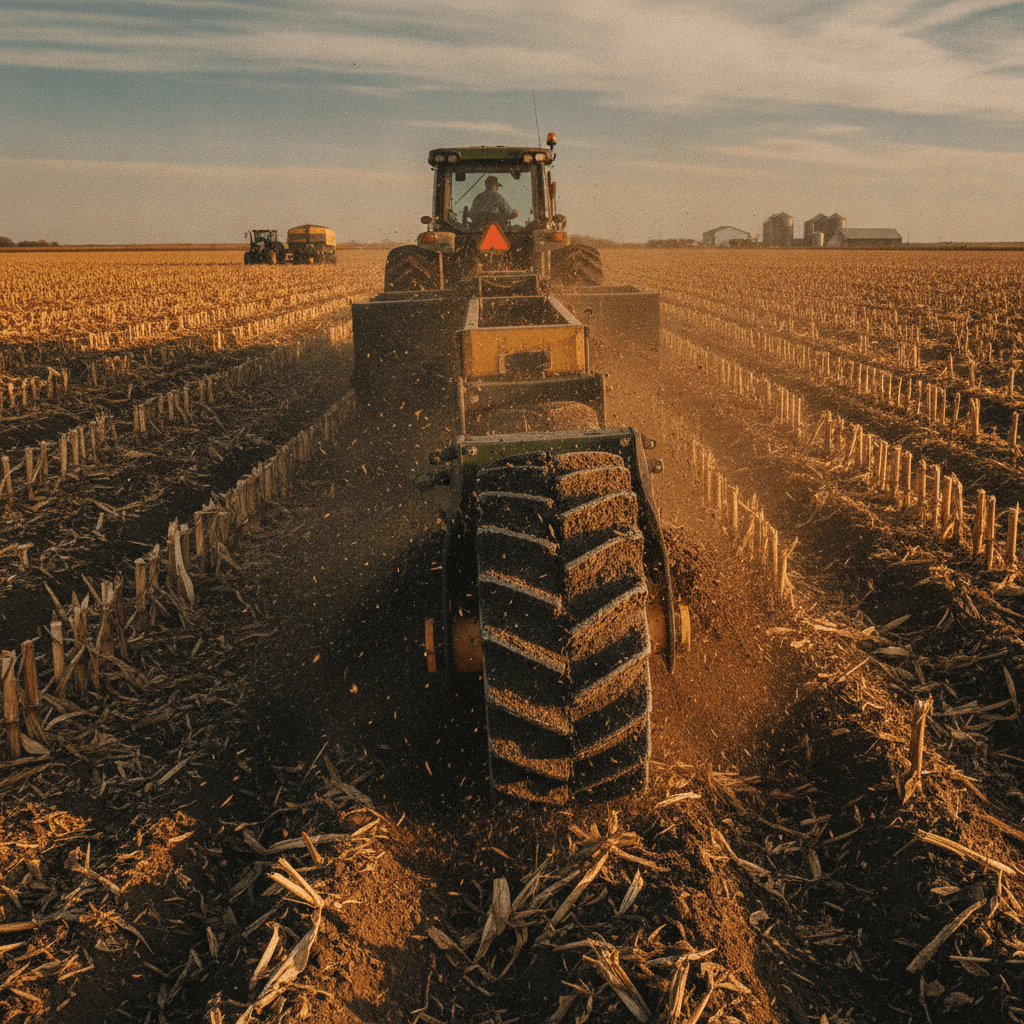
If you’re running corn-on-corn acres near Brookings, your planter is working in one of the most abrasive conditions a gauge wheel sees all season. Last year’s stalks are standing or matted across the row, the soil is tighter because corn root systems are harder on structure than soybeans, and your row units are fighting through residue on every single pass. That’s a fundamentally different workload than a corn-soybean rotation — and if your steel ring wasn’t designed with that wear pattern in mind, you’ll find out the hard way somewhere around the third week of planting.
The real question isn’t whether your steel ring looks fine sitting in the shed. It’s whether the design can actually hold up across back-to-back corn seasons without the tire lip grinding down, the scraper position drifting, or the ring itself working loose from the mount.
- Why Corn-on-Corn Is Harder on Your Gauge Wheel Than Most Farmers Realize
- What a Steel Ring Actually Needs to Do in These Conditions
- The Gap Most Competing Products Don't Fill: Rotation-Specific Wear Context
- How to Check Whether Your Current Ring Is Keeping Up
- Frequently Asked Questions
- Talk to Jung Enterprise Before Planting Season Starts
Why Corn-on-Corn Is Harder on Your Gauge Wheel Than Most Farmers Realize
A lot of operators don’t think about rotation when they’re shopping for gauge wheel components. They compare ring-to-ring on price, pick something that looks close enough, and move on. But corn-on-corn fields put a specific combination of stresses on your gauge wheel that’s worth understanding before you’re pulling the planter out of the field mid-April to swap parts.
First, residue volume is higher. A full corn stalk season leaves significantly more dry matter per acre than soybeans. In a no-till or reduced-till operation near Brookings — where spring soils can be wet and you’re pushing through mats of standing or flattened stalks — that residue is constantly working against the outside edge of your gauge wheel tire. The tire lip takes the first contact. If it’s unprotected, you’re grinding rubber against debris with every row-unit revolution.
Second, the soil itself is harder on equipment in back-to-back corn. Corn root mass competes differently with soil structure than soybean roots, and fields that haven’t had a rotation break tend to develop tighter soil in the seed zone. Your gauge wheels are pressing harder to maintain depth, which puts more lateral force on the tire lip and the ring mount.
Third — and this is the one operators overlook most — mud and debris have nowhere clean to go in heavy corn residue. It packs against the gauge wheel, gets spun back into the tire sidewall, and builds up in the contact zone between the ring and tire if the design doesn’t actively clear it.
What a Steel Ring Actually Needs to Do in These Conditions
A steel ring that just sits on the tire lip and protects it from direct wear is only doing half the job in a corn-on-corn rotation. You also need it to actively shed the debris that’s building up — and that means the scraper function matters as much as the ring itself.
Jung Enterprise’s patented steel ring (US Patent 11,707,013 B2) is built with both functions in one piece. The ring mounts to the gauge wheel with six screws and includes a built-in scraper that clears mud and residue as the wheel turns. There’s no separate scraper bolt-on that can shift position or loosen under vibration — which matters a lot when you’re crossing heavy stalk rows at planting speed in wet conditions.
The durability numbers are straightforward: field-tested to only 1/16″ of wear after 13,000 planted acres across three seasons. That’s real-world performance on real acres, not lab data. For a farmer near Brookings running corn-on-corn with a 16- or 24-row planter, that kind of wear rate means you’re not replacing the ring every year just because conditions were tough.
The Gap Most Competing Products Don’t Fill: Rotation-Specific Wear Context
If you look at what most steel ring and gauge wheel suppliers actually publish, you’ll find a lot of general information about mud shedding and tire protection — but almost nothing about how wear rates change based on crop rotation, residue load, or consecutive corn seasons. That context matters when you’re budgeting parts costs across a three- or five-year planning horizon and trying to decide whether a more durable ring justifies its price over a cheaper import that looks similar on spec sheets.
The honest answer is that a cheaper ring in a corn-soybean rotation might last long enough to be acceptable. That same ring in corn-on-corn, in clay or gumbo soils across eastern South Dakota or southwestern Minnesota, is going to show you its limits faster — typically in accelerated tire lip exposure as the ring shifts or wears unevenly at the contact points. Once the lip is compromised, you’re not just buying a new ring — you’re buying new gauge wheel tires too.
Jung Enterprise is a family-owned manufacturer based in Ipswich. These parts are made in America, tested in the field conditions of the Northern Plains, and sold with the understanding that operators in places like Brookings or across the border into Iowa are dealing with real Corn Belt soil pressure — not a controlled test environment. You can browse all available products at our products page to see what’s compatible with your planter or air seeder setup.
How to Check Whether Your Current Ring Is Keeping Up
You don’t need a torque wrench or a measuring tool to get a first read on whether your steel ring is doing its job through a corn-on-corn season. Here’s what to check between fields or at your post-season inspection:
- Tire lip exposure: With the ring on, you should not be able to see raw rubber at the outer tire lip edge. If the lip is exposed or shows shiny wear contact, the ring has shifted or worn enough to stop protecting it.
- Scraper position: If your ring has a separate scraper component, check whether it’s still seated flush. In corn residue conditions, vibration from stalk contact can walk scraper hardware loose over a full planting season.
- Ring fastener torque: Check all six mounting screws after your first 500 acres in heavy residue. Residue impact and vibration can loosen fasteners faster than clean-field planting.
- Debris pack between ring and tire: If you’re pulling packed residue or mud from the gap between the ring and the tire sidewall, your design isn’t clearing material effectively. That pack creates uneven pressure on the tire lip over time.
- Wear measurement: Any ring showing more than 1/16″ of wear inside of a single full season — around 4,000 to 5,000 planted acres — is wearing faster than it should be under normal corn-on-corn conditions.
Frequently Asked Questions
Does corn-on-corn actually shorten the life of a steel ring compared to a corn-soybean rotation?
Yes, in most cases. Higher residue volume, more abrasive stalk contact, and tighter soil conditions all accelerate wear on the gauge wheel system. The difference is most visible on the tire lip and at the ring mounting points. A ring that lasts three seasons in a rotation may show visible wear in two seasons in back-to-back corn — especially in wet springs with heavy residue mats.
Can I run the same steel ring on all my planter’s row units even if some rows see more residue than others?
Yes. Jung Enterprise’s steel ring is designed for consistent performance across row units. If you’re seeing more wear on specific rows, check whether those row units have any alignment or down-pressure irregularities that are increasing lateral load on the gauge wheel.
Is a separate scraper bolt-on just as effective as a built-in scraper for corn-on-corn conditions?
Not typically. Separate scrapers introduce an additional fastener point that can loosen from stalk impact and vibration. In heavy corn residue near Brookings or across eastern South Dakota, that hardware takes a beating. A one-piece design with the scraper integrated into the ring eliminates that failure point entirely.
Does Jung Enterprise’s steel ring work on air seeders running in corn stubble fields?
Yes. The steel ring is compatible with multiple gauge wheel sizes across planters, air seeders, and no-till drills. If you’re running an air seeder in corn stubble ahead of a small grain crop, the same wear patterns apply — and the ring handles those conditions the same way.
How do I know if the ring I’m running is a patented American-made design or an overseas knock-off?
Ask your supplier directly for the patent number and country of manufacture. Jung Enterprise’s steel ring carries US Patent 11,707,013 B2 and is manufactured domestically. If a supplier can’t give you a clear answer on those two points, that tells you something about the product.
Talk to Jung Enterprise Before Planting Season Starts
If you’re running corn-on-corn acres near Brookings — or anywhere across South Dakota, Minnesota, or Iowa — and you’re not sure whether your current steel ring is actually built for that kind of season-over-season wear, it’s worth a conversation before you’re 10,000 acres into planting and finding out the answer the hard way.
Jung Enterprise is based in Ipswich and works directly with row-crop farmers, custom planters, and ag dealers across the Northern Plains. We can help you figure out what fits your equipment and whether what you’re running now is going to hold up across back-to-back corn. Reach out through our contact page or call us at (605) 281-0497. We’ll give you a straight answer — not a sales pitch.