
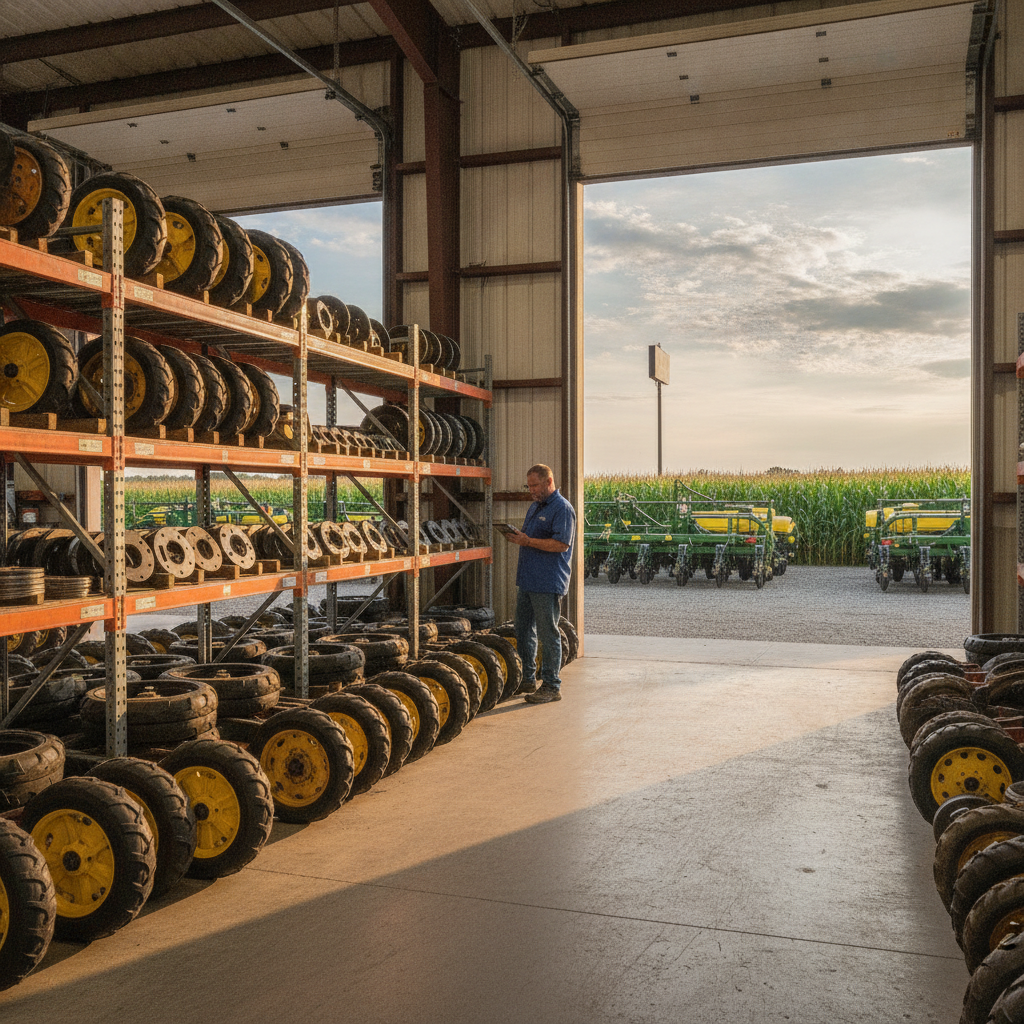
How Do Ag Dealers Near Fargo Know Whether Their Gauge Wheel and Steel Ring Parts Are Actually Priced Right for Their Market — Or Just Marked Up to Cover Inventory Risk?
If you’re an ag dealer near Fargo carrying planter parts — gauge wheels, steel rings, wheel retainers — there’s a question worth sitting with before next spring: are your prices where they need to be, or did you set them based on what a rep told you and then never revisited? A lot of dealers in North Dakota, Minnesota, and South Dakota end up carrying quality parts at margins that don’t actually hold up when you factor in turn rate, dead stock risk, and what farmers in your area are willing to pay when they’re two days into a planting window and desperate for a fix.
This isn’t a pricing formula article. It’s a practical look at the real variables that determine whether your gauge wheel and steel ring inventory is actually working for your business — or just sitting on a shelf eating carrying costs while your customers drive past you to find something faster.
The Inventory Risk Problem Most Dealer Pricing Ignores
Most ag dealers price planter parts with a standard markup off wholesale cost. That works until it doesn’t. The problem near Fargo and across the broader Red River Valley and Northern Plains is that your planting window is short, wet, and high-stakes. Farmers are not comparison shopping when their planter is down at 8 a.m. and rain is coming by Thursday. They’re calling you, or they’re calling whoever picks up.
That urgency is real value to your customer — and it’s something your pricing should reflect, not apologize for. Dealers who price gauge wheels and steel rings as commodity parts, treating them the same as a bag of bolts, are leaving margin on the table. These are wear items with a defined replacement cycle. A farmer running 1,500 acres of corn near Fargo will need them. The question is whether they’re buying from you or ordering online and waiting four days.
The flip side is also real: if you overstock on parts that don’t move — say, a gauge wheel diameter that doesn’t fit the dominant planter brand in your area — you’ve got money tied up in inventory that sits until someone decides to clean house. That’s the inventory risk most dealer pricing doesn’t account for upfront.
What Drives Turn Rate for Steel Rings and Gauge Wheels in Northern Plains Markets
Turn rate on these parts comes down to three things: what planters your customers are running, how aggressive the soil conditions are in your county, and how well you’ve communicated to your customers that the part exists and solves a problem they actually have.
Near Fargo and across the Red River Valley into Minnesota, the soil conditions are exactly the kind that chew through gauge wheel tires and plug conventional gauge wheels with heavy clay and crop residue. A steel ring that protects the tire lip and acts as a built-in scraper — no separate part to buy — is a straightforward sell to a farmer who’s already dealt with a plugged gauge wheel mid-field. The problem is most dealers haven’t made that connection explicit for their customers. If your parts counter doesn’t have a demo unit or a two-sentence explanation of what the steel ring does differently, you’re relying on farmers to figure it out themselves. Most won’t.
Turn rate improves when your staff can explain the problem the part solves in the same time it takes to ring up the sale. That’s not a training seminar — it’s two sentences: the steel ring protects your gauge wheel tire lip from wear and scrapes mud before it plugs the wheel. Field-tested to only 1/16 inch of wear after 13,000 planted acres over three years. Done. That’s a compelling case for a farmer who’s replacing OEM gauge wheel tires every other season.
The Gap Most Competitor Lines Don’t Address for Dealers
Here’s what you’ll find if you look at how major planter component manufacturers talk to dealers: most of it is farmer-focused content about how the part works in the field. Very little of it is structured around the dealer’s actual business problem — which is stocking the right mix of parts at a price point that moves product before planting season ends and doesn’t leave you holding slow inventory in June.
Jung Enterprise, based in Ipswich, South Dakota, builds its dealer relationships around that reality. The parts are American-made, patented (US 11,707,013 B2 and related patents), and designed to fit planters, air seeders, and no-till drills across multiple OEM configurations. For a dealer near Aberdeen or Fargo stocking parts for a range of customers — from 500-acre family operations to large custom planting outfits — that compatibility range matters. You’re not stocking a part that only fits one brand. See the full product lineup here.
The built-in scraper design on the steel ring also simplifies your inventory. Instead of stocking a gauge wheel guard separately from a scraper attachment, your customer gets both in one part. Fewer SKUs, simpler upsell, faster counter transaction.
How to Evaluate Whether Your Current Pricing Reflects Local Demand
Ask yourself three questions about your current gauge wheel and steel ring inventory:
- What’s your turn rate on these parts from February through May? If you’re selling through your stocking quantity once or less during peak planting season, either your price is too high, your inventory mix is wrong, or your customers don’t know you carry the product.
- What are farmers in your area replacing gauge wheel tires for? If the answer is mud plugging and tire lip wear — both common in heavy clay country near Fargo, across North Dakota, and into South Dakota — that’s a direct setup for the steel ring conversation. Your pricing should reflect the value of preventing a $200+ service call during a five-day planting window.
- Are you pricing for the urgency or for the catalog? A part that prevents a planter from going down mid-field in late April is not a commodity. Price it accordingly, and be ready to explain why it’s worth it in one sentence.
Iowa and Minnesota dealers face similar dynamics. Short windows, wet springs, and farmers who’ve already lost days to equipment issues are not price-sensitive in the same way they are in October. Pricing strategy should account for that seasonality rather than holding one flat price year-round.
Frequently Asked Questions
What margin should ag dealers expect on steel rings and gauge wheels?
Margin expectations vary by supplier and volume, but for wear parts with strong local demand during a compressed planting window, a dealer should expect better-than-commodity margins. Contact Jung Enterprise directly at (605) 281-0497 or through the contact page to discuss dealer pricing and volume terms.
How do I know which gauge wheel diameter to stock for my area near Fargo?
Start with the dominant planter brands in your customer base. Jung Enterprise’s curved spoked gauge wheels fit multiple OEM configurations — ask about compatibility when you call. Stocking one or two high-fit SKUs will move faster than trying to cover every possible application with low quantities of many sizes.
Do dealers near the Red River Valley need to stock for no-till drills as well as planters?
Yes, especially if you’re serving any wheat or small grain acres alongside corn and soybean ground. No-till drill gauge wheels see significant wear in the heavy residue and wet clay conditions common in that region. It’s worth asking your customers what they’re running before locking in your stock mix.
What’s the warranty or replacement situation if a part fails and a customer comes back?
Jung Enterprise builds parts that are field-tested to 1/16 inch of wear over 13,000 acres in three years. That’s a durable product story you can stand behind at the counter. For specific warranty terms, reach out directly to confirm before making claims to your customers.
Is there a minimum order quantity for dealers to carry Jung Enterprise parts?
Reach out directly to discuss dealer terms. Jung Enterprise works with dealers and distributors across South Dakota, North Dakota, Minnesota, and Iowa, and the setup process is straightforward for established ag retail operations.
Ready to Talk Dealer Pricing and Inventory?
If you’re an ag dealer near Fargo, Aberdeen, or anywhere across the Northern Plains looking to stock planter parts that actually move during planting season — parts with a clear value story, patented American-made construction, and a compatibility range that fits your customer base — Jung Enterprise is worth a call. Reach out at (605) 281-0497 or email help@jungenterprise.net. You can also contact us directly through the website to ask about dealer terms, available SKUs, and lead times before the pre-planting rush hits.