
How Do Custom Planters Near Ipswich Know Whether Their Steel Ring Is Actually Installing Correctly — Or Just Mounted Wrong From the Start?
If you’re running a steel ring on your gauge wheel and still dealing with mud buildup, tire lip wear, or a ring that wobbles or shifts mid-field, there’s a good chance the issue started at installation — not with the part itself. Farmers and custom planters near Ipswich deal with some of the worst spring mud conditions in the Northern Plains, and a steel ring that isn’t seated right from day one will underperform in exactly the conditions it was designed to handle. This article walks through what correct installation actually looks like, what mistakes are most common, and why getting this right before the first field run matters more than most operators realize.
Why Installation Matters More Than Most Operators Think
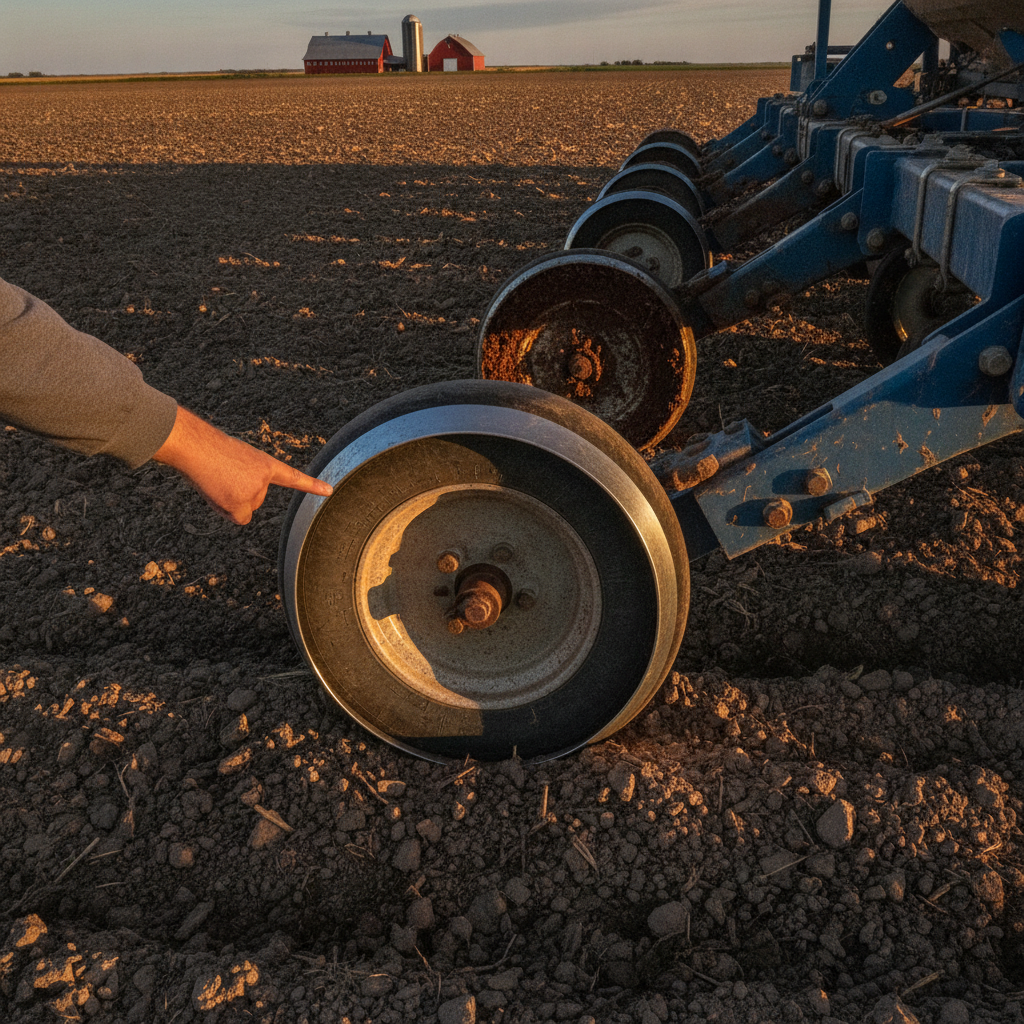
A steel ring isn’t a set-it-and-forget-it part — but it shouldn’t require constant fussing either. The design on Jung Enterprise’s patented steel ring (US Patent 11,707,013 B2) is built around six-screw mounting that locks the ring securely to the gauge wheel rim. When those six screws are torqued evenly and the ring is seated flush against the tire lip, it does exactly what it’s supposed to: protect the tire from wear, act as a built-in scraper to shed mud and debris, and keep the gauge wheel rolling clean through gumbo clay and wet residue.
But skip a step, under-torque two screws, or mount it slightly cocked, and you’ve introduced slop into the system. In heavy, sticky soils like the kind you’ll find in fields east of Ipswich toward Aberdeen or south toward Huron, even a small amount of ring movement creates enough gap for mud to pack in behind the ring — which is the exact problem the ring was supposed to prevent.
Step-by-Step: What Correct Steel Ring Installation Actually Looks Like
Here’s what the process should look like when you’re doing it right:
- Start with a clean rim surface. Any caked-on soil, rust scale, or debris on the gauge wheel rim face will prevent the steel ring from sitting flush. A wire brush takes five minutes. Skipping it costs you proper seating.
- Align the ring to the tire lip before running any screws. The ring should sit against the outer edge of the tire lip — not riding up on the sidewall and not dropped too far inward toward the hub. Take a minute to center it by hand before you commit to a screw position.
- Run all six screws in by hand first. Don’t drive one screw fully home before the others are started. If you torque one corner down tight before the opposite side is engaged, you’ll pull the ring out of alignment and it won’t lay flat against the rim.
- Tighten in a cross pattern, not a circle. The same principle as lug nuts. Work across the ring — not around it — to pull it down evenly. This is the step most operators skip, and it’s why rings end up slightly cocked after the first hard field run.
- Final torque check after the first field. Vibration from uneven terrain and residue contact will settle the ring in. Pull it back and run a torque check on all six screws after the first 50 to 100 acres. After that, it’s stable.
What Competitors Don’t Tell You About Installation (And Why That’s a Problem)
Here’s the gap that most competitor content — including what you’ll find from Yetter, Schaffert, Copperhead Ag, and similar suppliers — doesn’t address: they’ll sell you the part and describe what it does, but they largely skip over what a bad installation actually looks like in the field and how to diagnose it after the fact. If you search their sites, you’ll find product specs and marketing copy, but almost nothing on installation troubleshooting or what failure modes stem from user error versus a design or material problem.
That matters, especially for custom planters running 24- or 48-row equipment where you can’t easily pull a single row unit and inspect it without stopping an entire pass. By the time you notice a ring is wobbling or mud is packing behind it, you’ve already planted a few hundred acres with a compromised setup.
The built-in scraper function of Jung Enterprise’s steel ring only works when the ring sits flush. If it’s tilted even a few degrees, the scraper contact angle changes, and instead of deflecting mud outward, you start trapping it. That’s not a product flaw — that’s a mounting issue that’s fully preventable.
Signs Your Steel Ring Was Mounted Wrong
You don’t always catch a bad installation at the shop. Here’s what to look for in the field or when you pull equipment back in:
- Uneven mud buildup — heavy on one side of the ring, clean on the other. Points to a ring that’s not sitting level.
- One or two screws that are noticeably looser than the rest after a field run. Cross-pattern torque prevents this; circular torque causes it.
- Visible gap between the ring and the rim face on any portion of the circumference. The ring should be fully in contact with the rim all the way around.
- Ring shifting when you try to rotate it by hand with the gauge wheel stationary. At correct torque, it should be solid.
- Accelerated tire lip wear on one side. If the ring isn’t protecting the full lip, wear concentrates where the gap is.
If you’re seeing any of these and you’re running our curved spoked gauge wheels alongside a steel ring, it’s worth checking both. A gauge wheel that’s not running true compounds a misaligned ring — and both affect planting depth consistency across the run.
Durability Over the Long Run When Installation Is Done Right
When the ring is installed correctly, the durability numbers hold up in real conditions. Field testing across 13,000 acres over three years showed only 1/16 inch of wear. That’s not a lab result — that’s running through the kind of wet, clay-heavy ground you get in early May across South Dakota and into North Dakota toward Fargo. Operators near Watertown and into Minnesota have run similar mileage on these rings without replacement. The design earns those numbers when it’s seated properly. A bad mount compromises the contact geometry, and you’ll see wear accelerate at the points where the ring isn’t held tight.
Installation is the one variable that’s entirely in the operator’s hands. The part is built to last — but only if it’s given the right foundation to work from.
Frequently Asked Questions
How long does it take to install a steel ring on one gauge wheel?
With a clean rim and the right socket, you’re looking at about 10 to 15 minutes per wheel. Budget a bit longer the first time while you’re establishing your process. After that it goes fast.
Can I install the steel ring without removing the gauge wheel from the planter?
In most cases, yes. The six-screw mount is accessible without full removal on most row unit configurations. It helps to have good lighting and a torque wrench with a short extension. Some operators prefer to pull the wheel for the first install to make sure the ring seats cleanly, then do subsequent installs in place.
What screw torque spec should I use?
Contact Jung Enterprise directly for the current torque recommendation for your specific ring size and mounting hardware. Don’t estimate — under-torqued screws are the leading cause of ring shift in the first field run.
Does the steel ring work on both planters and air seeders?
Yes. Jung Enterprise’s steel ring is compatible with planters, air seeders, and no-till drills across multiple OEM configurations. If you’re not sure whether your gauge wheel size is covered, reach out before you order.
What if one of my screws strips during installation?
Stop and replace the screw before continuing. Running with five screws instead of six changes the load distribution around the ring and increases the chance of movement in the field. It’s not worth the risk mid-season when a wet week in May near Ipswich can cost you your entire planting window.
Talk to Jung Enterprise Before Planting Season Gets Here
If you’re a custom planter, ag dealer, or row-crop farmer in the Ipswich area — or you’re running equipment across South Dakota, North Dakota, or into Minnesota — and you want to make sure your steel ring setup is installed correctly before the ground opens up in spring, reach out to us directly. We can walk you through the install process, confirm compatibility with your gauge wheel setup, and make sure you’re not losing the benefits of a patented, American-made part to a mounting mistake that takes ten minutes to fix.
Contact Jung Enterprise here or call us at (605) 281-0497. Don’t head into planting season guessing whether your ring is seated right.