
How Do Farmers Near Bismarck Decide Whether to Buy Gauge Wheel Parts Direct From the Manufacturer — Or Through a Local Ag Dealer?
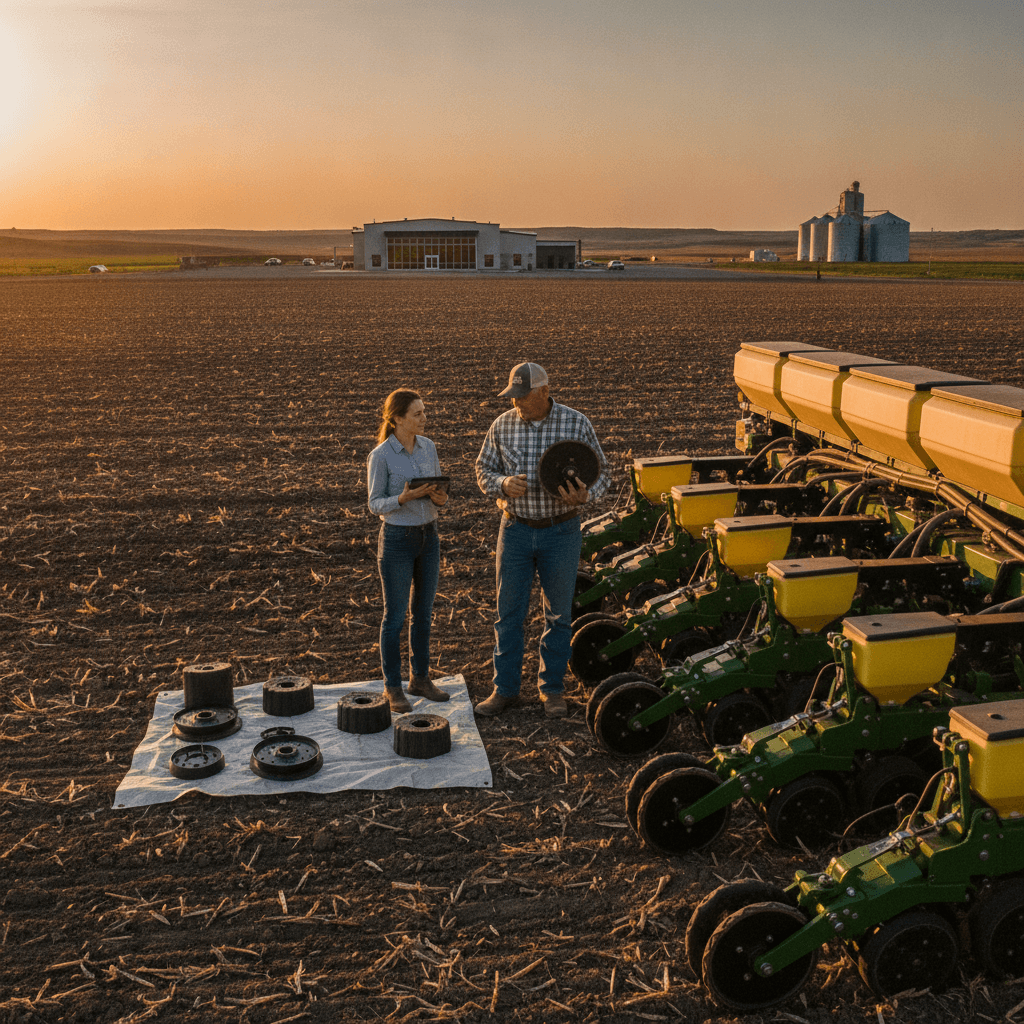
If you’re running a planter or air seeder near Bismarck and it’s time to replace gauge wheels, steel rings, or wheel retainers, you’ve got two basic options: buy direct from the manufacturer or go through a local ag dealer. Neither answer is automatically right. Which one actually works better for you depends on your operation size, how fast you need parts, and whether your dealer even stocks what you’re looking for. Here’s a straightforward breakdown so you can make the call before planting season puts you under the gun.
Why This Question Matters More in the Northern Plains Than Anywhere Else
Farmers in North Dakota and across the Northern Plains are working with some of the shortest, most unforgiving planting windows in the Corn Belt. When conditions finally open up in late April or early May around the Bismarck area, you might have a week — maybe less — before the window closes again or the next rain system moves in. If you’re scrambling to find a wheel retainer or a curved spoked gauge wheel the same week you need to be in the field, the sourcing question stops being theoretical and starts costing you real money.
The other factor is soil type. The heavy clay and gumbo soils across much of North Dakota and into central South Dakota punish worn or mismatched parts faster than lighter prairie soils will. A gauge wheel that’s marginal going into spring won’t last the season. That raises the stakes on getting the right part — not just any part that fits.
What Buying Direct From a Manufacturer Actually Gets You
When you order gauge wheel parts direct from a manufacturer like Jung Enterprise out of Ipswich, South Dakota, you’re dealing with the people who built the product and know it inside out. There’s no middleman translating your question, and if you’ve got a compatibility question — say, whether a curved spoked gauge wheel fits your specific planter brand and row unit configuration — you can get an actual answer from someone who knows the specs.
Direct buying also means you’re not paying a markup layered on by a distribution chain. That can matter when you’re outfitting a 24-row planter or running multiple units across a custom planting operation. The tradeoff is lead time. If you’re ordering in February or early March — which is when you should be thinking about this — shipping time from Ipswich to Bismarck or Fargo is typically not an issue. If you wait until the week before planting starts, direct shipping may not save you.
What Buying Through a Local Ag Dealer Gets You
A dealer who stocks quality gauge wheel parts gives you something direct ordering can’t always match: same-day or next-day availability when you’re already in the field and something breaks. That’s a real advantage. If your dealer in the Bismarck area or up near Watertown has Jung Enterprise parts on the shelf, you can be back running the same day instead of waiting on a shipment.
The catch is that not every dealer stocks the same parts. A lot of ag retail locations carry OEM replacement parts or whatever brand their distributor pushes, which may or may not be what you actually need. Patented, American-made parts with documented durability — like the steel rings Jung Enterprise produces, which are covered under US Patent 11,707,013 B2 — aren’t always what ends up on the shelf at a generic farm supply store. Before you assume your local dealer has the right part, it’s worth a phone call to confirm.
The Gap Nobody Talks About: Knowing What Your Dealer Actually Stocks Before You Need It
Here’s where most farmers get caught out — and it’s something the big competitor websites rarely address directly. They’ll tell you to buy from a dealer network or order online, but they don’t walk you through what questions to ask before you commit to a supply chain for the season.
Before planting, call your local ag dealer and ask these specific questions:
- Do you stock gauge wheels, wheel retainers, and steel rings as separate line items — or only as part of a kit?
- What brands are you carrying, and are they American-made or imported?
- How quickly can you reorder if I need more mid-season?
- Do you carry parts that fit my specific planter brand and gauge wheel diameter?
- What’s your return policy if a part doesn’t fit?
If your dealer can’t answer those questions or has to check with their distributor on all of them, that’s a signal that sourcing direct — or building a relationship with a manufacturer who can ship fast — may be the smarter hedge for your operation.
How Jung Enterprise Works With Both Farmers and Dealers
Jung Enterprise, based in Ipswich, sells direct to farmers and works with ag dealers and distributors across South Dakota, North Dakota, and into Minnesota. If you’re an individual farmer ordering for your own operation, you can reach out directly and get exactly what you need. If you’re a dealer near Aberdeen, Fargo, Watertown, or the Bismarck area looking to stock parts your customers are actually asking for, Jung Enterprise is set up to work with you on that too.
The parts — steel rings, wheel retainers, and curved spoked gauge wheels — are all American-made, patented, and field-tested. The steel ring, for example, protects the tire lip from wear, acts as a built-in scraper to shed mud and debris, and mounts with six screws. It’s one part doing two jobs, which simplifies your parts inventory whether you’re a farmer or a dealer stocking a shelf. Across field testing, it’s shown only 1/16 inch of wear after 13,000 planted acres over three seasons — that’s not marketing language, that’s documented performance you can plan around.
So Which Route Makes More Sense for Your Operation?
For most farmers near Bismarck running a consistent row-crop operation, the best approach is a combination: establish a direct relationship with a manufacturer for reliable sourcing and compatibility support, and confirm whether your local dealer stocks the same brand so you have a same-day backup option if something goes sideways mid-planting. Don’t wait until the ground is fit to start making those calls.
If you’re a custom planter running back-to-back jobs through the spring, the calculus is different — downtime costs you not just your own yield but your customers’ confidence. In that case, having a direct line to a manufacturer who can answer technical questions and ship quickly is probably more valuable than dealer convenience.
Frequently Asked Questions
Can farmers near Bismarck order Jung Enterprise parts direct without going through a dealer?
Yes. Jung Enterprise sells direct to farmers and operators. You can reach out through the contact page or order through the online cart. There’s no requirement to go through a distributor if you’d rather deal direct.
How do I know if a Jung Enterprise gauge wheel or steel ring fits my planter brand?
The best way is to contact Jung Enterprise directly with your planter brand, model, and gauge wheel diameter. The team in Ipswich can confirm compatibility before you order so you’re not dealing with a fitment issue when you’re already in the field.
Are gauge wheel parts from Jung Enterprise available through ag dealers in North Dakota?
Jung Enterprise works with dealers and distributors across the region, including North Dakota and South Dakota. Call or email to find out if there’s a stocking dealer near you, or order direct if you need parts quickly.
What’s the difference between buying a name-brand gauge wheel from a dealer and buying a patented part direct from the manufacturer?
Name-brand parts from a dealer are often OEM replacements that wear at roughly the same rate as what wore out in the first place. Patented parts like Jung Enterprise’s steel ring are engineered with different priorities — in this case, durability, mud-shedding, and a built-in scraper function that eliminates a separate part. Field testing across 13,000 acres showed only 1/16 inch of wear over three seasons. That’s a different category of product than a standard OEM replacement.
How early should I be ordering gauge wheel parts before planting season?
For the Northern Plains — North Dakota, South Dakota, and into Minnesota — February or early March is a reasonable target. That gives you time to confirm compatibility, receive parts, and do any installation before the planting window opens. Waiting until April puts you at risk of supply delays during peak demand season.
If you’re near Bismarck or anywhere across the Northern Plains and want to work through the sourcing question for your specific operation, contact Jung Enterprise directly. We’ll give you a straight answer on what fits, what’s available, and how to get it to you before you need it.