
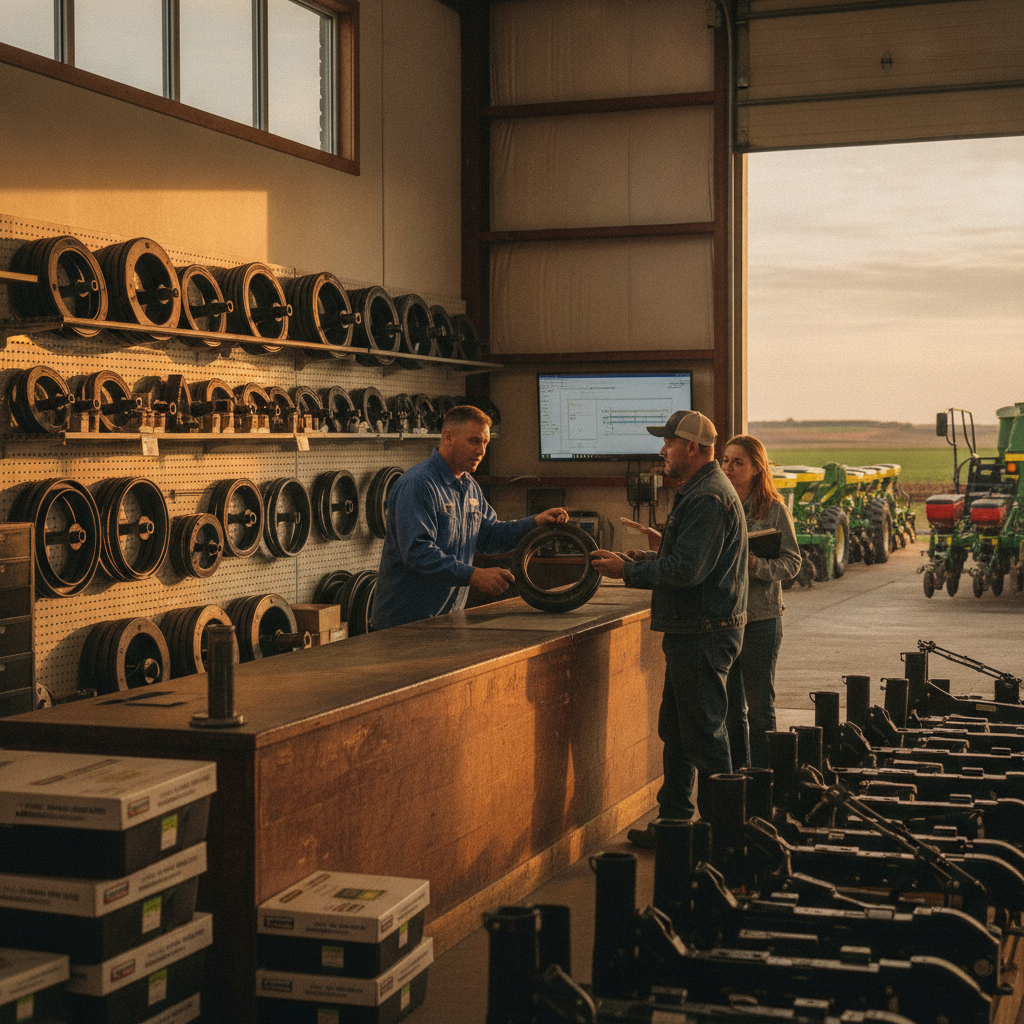
How Do Ag Dealers Near Bismarck Know Whether Their Steel Ring Inventory Is Actually Sized for the Planters Their Customers Are Running — Or Just Stocked on a Guess?
If you’re an ag dealer near Bismarck stocking gauge wheel parts for the upcoming season, here’s a question worth asking before you place that order: do you actually know which steel ring sizes your customers need, or are you going off last year’s leftover inventory and a rough sense of what’s popular? Getting this wrong doesn’t just mean a shelf full of parts that don’t move — it means a corn or soybean farmer shows up in late April, your planting window is already tight, and you’re sending them away without what they need. That’s a lost sale and a lost customer, often at the same time.
At Jung Enterprise out of Ipswich, South Dakota, we work with ag dealers across the Northern Plains — from South Dakota up through North Dakota and across into Minnesota and Iowa — and the sizing question is one of the most common places dealers get tripped up. It’s not complicated once you know what to look for, but most parts manufacturers and distributor catalogs don’t explain it plainly enough to make it actionable at the dealer level.
Why Steel Ring Sizing Isn’t a One-Size Situation
The steel ring mounts to the outer face of the gauge wheel tire, protecting the tire lip from wear and acting as a built-in scraper that knocks mud and debris clear before it can pack in and plug the row unit. That scraper function is what separates a well-designed steel ring from one that just sits there looking like it’s doing something.
But for the ring to work correctly — and to even mount at all — it has to match the gauge wheel it’s going on. Gauge wheels across common planter and air seeder platforms aren’t all the same diameter, and the tire profile matters too. If the ring doesn’t seat flush against the tire lip, you lose the scraper effect, you create a leverage point that accelerates tire wear, and in some cases the ring itself won’t stay put through a full day of field work.
The Jung Enterprise steel ring mounts with six screws and is sized to fit specific gauge wheel diameters across multiple OEM planter and air seeder brands. Before stocking, you need to know what your customer base is running — and that starts with asking the right questions when farmers come through your door or call in.
The Sizing Questions Every Dealer Near Bismarck Should Be Asking
Before you place any order on steel rings, run through this list with your top-volume customers or pull it from your service records:
- What planter or air seeder platform are they running? Brand and model matters. A John Deere 1770NT, a Case IH Early Riser, a Kinze, and a Great Plains air drill all use different gauge wheel setups.
- What’s the gauge wheel diameter? This is the number you need to match the ring. If your customer doesn’t know off the top of their head, have them measure or pull the OEM part number.
- Have they replaced their gauge wheel tires recently? An aftermarket tire can have a slightly different profile than OEM, which affects how a steel ring seats. If they’ve switched tire suppliers, that’s worth knowing.
- Are they running a planter, air seeder, or no-till drill? The load profile is different across these machines, and it affects which ring spec makes sense for their operation.
None of this takes long to run through, but it’s the difference between stocking parts that move and stocking parts that sit. Dealers in North Dakota and across the Northern Plains tend to see a heavy mix of air seeder setups alongside conventional row-crop planters, so the range of gauge wheel sizes in your market is probably wider than dealers in Iowa or Illinois are dealing with.
What the Competitor Catalogs Don’t Tell You
One gap that consistently shows up when dealers are trying to spec steel rings from other suppliers is a lack of plain-language compatibility guidance. You’ll find part numbers, you’ll find application charts, but you won’t often find a clear explanation of what happens when the ring doesn’t fit correctly — or what field symptoms tell you a ring is the wrong size after the fact.
Here’s what to watch for if a customer comes back saying the ring isn’t performing: mud packing on the inboard side of the tire lip despite the ring being mounted, uneven tire wear in a band pattern near the bead, or a ring that works loose after one or two fields. All of these point to a sizing mismatch, not a product defect. The fix is matching the ring to the wheel, not switching brands.
Jung Enterprise’s steel ring is covered under US patent 11,707,013 B2 and related patents. It’s American-made and has been field-tested across 13,000 planted acres over three years with only 1/16″ of measurable wear. That durability story is worth something to your customers, but it only holds up when the part is sized correctly for the machine it’s going on. You can review the full product lineup to see compatibility details before you place a stocking order.
How to Build an Inventory That Actually Moves Before Planting Season
For dealers near Bismarck serving row-crop farmers across North Dakota, the realistic pre-season window for steel ring sales runs from late February through mid-April. After that, you’re in emergency territory — farmers are in the field and they need same-day or next-day turnaround, not a lead time conversation.
A practical approach: pull your service records from the past two seasons and sort by planter and air seeder platforms. Find your top three to five machine types by volume. Those are your anchor SKUs. Stock depth on those, and carry lighter on the edge cases. If a customer comes in with an unusual setup mid-season, you need a supplier relationship where you can get parts quickly — not a warehouse full of slow-moving rings that don’t cross to anything in your area.
That’s one reason dealer relationships matter as much as product specs when you’re sourcing from a manufacturer. Jung Enterprise is a family-owned operation out of Ipswich, and when a dealer in North Dakota or South Dakota calls with a question about sizing or a mid-season reorder, you’re talking to someone who knows the product — not a customer service queue.
Frequently Asked Questions for Ag Dealers Stocking Steel Rings
How do I know which steel ring size to order for a specific planter platform?
Start with the gauge wheel diameter and confirm whether the customer is running OEM or aftermarket tires. Contact Jung Enterprise directly with the planter make, model, and gauge wheel size and we’ll confirm the right fit before you order.
Can one steel ring size cover multiple planter brands?
Some sizes do cross over between platforms, but not universally. Don’t assume a ring that fits one manufacturer’s gauge wheel will seat correctly on another without confirming the diameter and tire profile match.
What’s the typical sell-through timeline for steel rings at the dealer level?
Most steel ring demand from row-crop farmers in North Dakota and South Dakota concentrates in a six-to-eight-week window before planting. Stock accordingly. Carrying over a large quantity into fall isn’t a disaster — the product holds — but it ties up cash unnecessarily.
Do Jung Enterprise steel rings require any special tools to install?
No. The ring mounts with six screws using standard tools. Farmers and operators can install it themselves without a shop visit, which is a selling point worth mentioning to customers who are used to downtime-heavy part swaps.
How do I place a dealer or distributor inquiry with Jung Enterprise?
Reach out through the contact page. We work with dealers across South Dakota, North Dakota, Minnesota, and Iowa, and we’re straightforward about lead times, minimum quantities, and what sizing support we can offer before you commit to an order.
Get the Right Steel Ring Inventory in Place Before the Rush Hits
Planting windows in North Dakota are short, and when a farmer near Bismarck is down because they can’t get the right part, the cost isn’t just the part — it’s the acres they’re not putting in while they wait. As a dealer, stocking the right sizes before the season starts is the most practical thing you can do to retain those customers when it matters most.
Jung Enterprise is based in Ipswich, South Dakota, and we supply steel rings, wheel retainers, and curved spoked gauge wheels to dealers and distributors across the Northern Plains. If you want to talk through what makes sense for your market before you place a stocking order, reach out to us directly. We’ll help you get sized right the first time.