
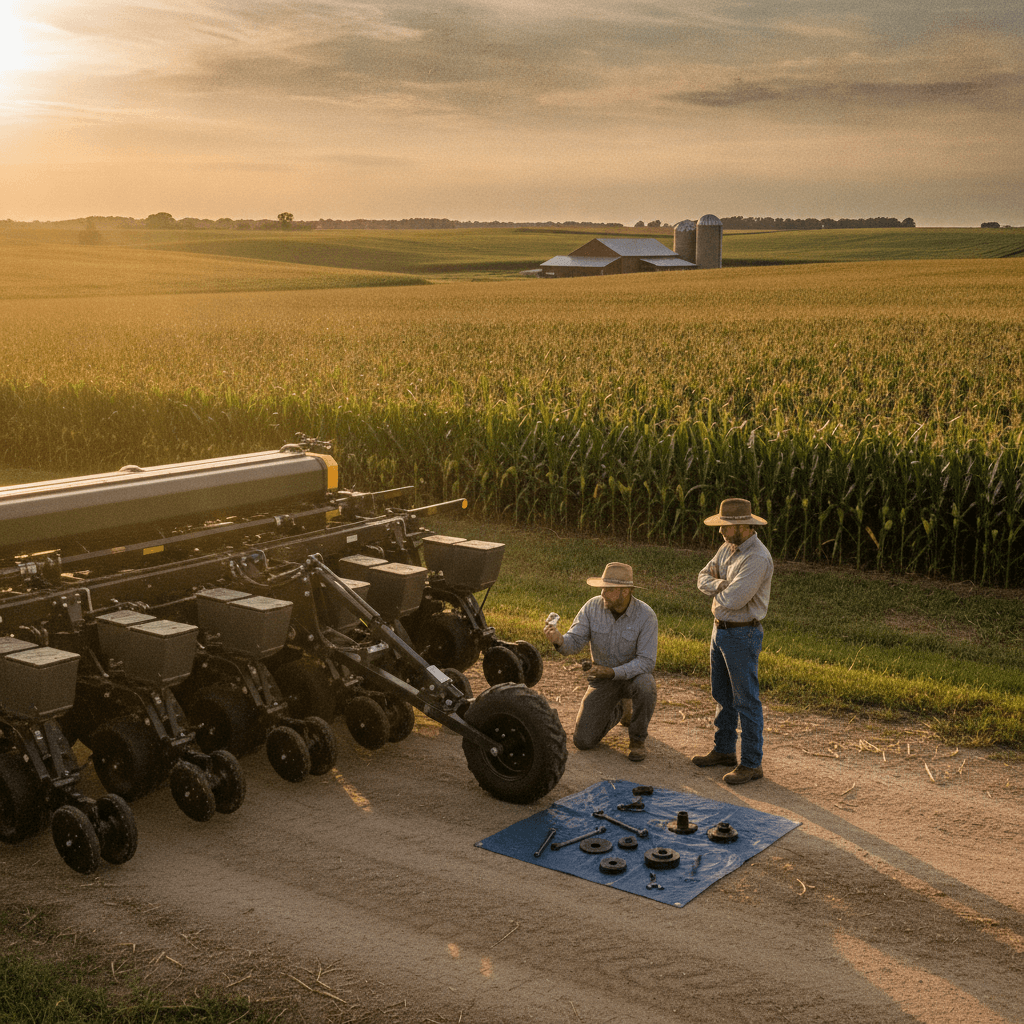
Do Wheel Retainers Fit Every Planter Brand? What Farmers Near Pierre Need to Know Before Buying
The short answer is no — wheel retainers are not one-size-fits-all, and if you’re farming near Pierre or anywhere across central South Dakota, getting the wrong retainer means you’re either forcing a bad fit or pulling a row unit out of service during planting. The good news is that fitment isn’t complicated once you know what to look for. This article breaks down exactly what determines compatibility, what questions to ask before you order, and why this is one of those parts where skimping or guessing creates real field problems.
- Why Wheel Retainer Fitment Is More Important Than Most Farmers Realize
- What Actually Determines Compatibility
- The Fitment Gap Most Dealers and Competitors Don't Address
- Planters, Air Seeders, and No-Till Drills: Not the Same Animal
- What to Ask Before You Buy a Wheel Retainer
- Frequently Asked Questions About Wheel Retainer Fitment
- Get the Right Part the First Time
Why Wheel Retainer Fitment Is More Important Than Most Farmers Realize
A gauge wheel that dislodges mid-field isn’t just an inconvenience. It means seed is going in at inconsistent depth — or not at all — on that row until you notice and stop to fix it. In a short planting window, which is every spring in South Dakota and North Dakota, losing even a few hours tracking down a loose or missing gauge wheel adds up fast across a corn or soybean operation.
The wheel retainer’s job is simple: keep the gauge wheel locked onto the row unit arm so it can’t walk off or get knocked loose by field debris, hard ground, or rough conditions. But how well it does that job depends entirely on whether it’s designed to match your specific row unit configuration. A retainer that fits loosely is nearly as useless as no retainer at all.
What Actually Determines Compatibility
Before you order any retainer, here’s what you need to confirm:
- Row unit brand and model: John Deere, Case IH, Kinze, White, Great Plains — they don’t all share the same arm geometry or axle diameter. What fits a John Deere MaxEmerge row unit may not fit a Kinze unit without modification.
- Gauge wheel diameter and width: Standard gauge wheels run in a range of diameters, and the retainer has to seat against the wheel correctly to do its job. If you’ve already swapped to an aftermarket gauge wheel, that changes the equation.
- Air seeder vs. planter vs. no-till drill: The row unit designs differ significantly across these machine types. A retainer built for a planter may not have the clearance or geometry needed for an air seeder or a no-till drill frame.
- OEM vs. aftermarket row unit arms: If you’ve replaced or modified arms over the years, don’t assume your original OEM fitment specs still apply. Measure the actual axle or mounting point before ordering.
Most of the competitor sites out there show you a retainer and say it’s compatible with a list of brands. What they rarely explain is why it fits — what dimension or interface drives that compatibility. That matters because if you’re running equipment that’s been modified, or if you’re a dealer in Iowa or Nebraska stocking parts for multiple customers with different machines, brand lists alone aren’t enough.
The Fitment Gap Most Dealers and Competitors Don’t Address
Here’s something worth knowing: most competitor product pages for wheel retainers give you a compatibility chart and stop there. They don’t explain what happens when a retainer fits loosely versus snugly, or how to verify fit before the part gets put under field stress. That’s a real gap, especially for custom planters and ag dealers who are stocking parts for multiple farmers with different setups across central South Dakota, Iowa, or Nebraska.
A quality retainer should snap or seat firmly without requiring you to force it. If you’re muscling it on, that’s a sign the fit isn’t right — and a part that’s forced onto an axle it wasn’t designed for will either work loose in the field or create wear on the wheel hub. Neither is acceptable when you’re trying to plant several hundred acres in a tight window.
Jung Enterprise’s Wheel Retainer is designed to prevent gauge wheel dislodging with a secure, stable mount. If you’re unsure whether it fits your specific row unit configuration, reach out directly before ordering — that’s a faster conversation than pulling a row unit mid-field to diagnose a loose wheel.
Planters, Air Seeders, and No-Till Drills: Not the Same Animal
This distinction matters more than it gets credit for. Farmers running no-till drills in the heavy gumbo soils west of Pierre, or strip-till setups across central South Dakota, are putting their row units through lateral stress that a standard corn planter working in lighter ground may never see. That affects how much load the retainer has to manage, and it affects how quickly a poorly-fitted retainer will fail.
Air seeders present their own set of variables. The row unit spacing, frame design, and axle dimensions on a typical air seeder are different enough from a row-crop planter that you should confirm compatibility separately — not assume that a retainer rated for planters will drop in on your air seeder without checking.
What to Ask Before You Buy a Wheel Retainer
Whether you’re buying direct or through a dealer, get clear answers to these before committing:
- Does this retainer fit my specific row unit brand, model, and year?
- Does it work with aftermarket gauge wheels, or only OEM wheels?
- Is this designed for planters, air seeders, no-till drills, or all three?
- What’s the install process — can I put this on without pulling the row unit off the planter?
- If it doesn’t fit, what’s the return or exchange process?
If a supplier can’t answer those questions clearly, that’s a red flag. Parts suppliers who are actually working with farmers — not just shipping product — will know their fitment specs well enough to tell you yes or no without sending you to a generic compatibility chart.
You can see the full range of what Jung Enterprise offers, including gauge wheels and steel rings, on the products page.
Frequently Asked Questions About Wheel Retainer Fitment
Will a wheel retainer work on both my corn planter and my soybean planter if they’re different brands?
Not necessarily. Compatibility is determined by the row unit design, not by the crop. Confirm the retainer fits each specific row unit, even if you’re running the same gauge wheel diameter across both machines.
Can I install a wheel retainer myself, or do I need a dealer to do it?
Most wheel retainers are straightforward to install in the shop without specialized tools. If your retainer requires unusual force or modification to seat properly, stop — that’s a fitment problem, not an installation technique problem.
I’m running an older planter with worn row unit arms. Will a new retainer still fit correctly?
Worn axle ends or damaged mounting points can affect how a retainer seats. Check the condition of the arm and axle before ordering, and let the supplier know if you’re working with older equipment so they can confirm fit.
Do wheel retainers work on no-till drills running in heavy or rocky soils near Pierre?
Yes, but confirm the retainer is rated for the lateral loads that come with no-till and heavy soil conditions. A retainer that works fine in light ground may not hold up the same way in the heavier gumbo soils common across central and western South Dakota.
I’m an ag dealer stocking parts for multiple farmers. How do I figure out which retainer SKUs to carry?
Contact Jung Enterprise directly. We can help you map out which retainers fit the most common row unit configurations in your area so you’re not guessing or overstocking the wrong SKUs before planting season hits.
Get the Right Part the First Time
Fitment questions are easy to answer before you order and expensive to sort out in the field. If you’re farming near Pierre, or if you’re a dealer in South Dakota, North Dakota, Iowa, or Nebraska trying to stock the right parts for your customers, Jung Enterprise is a phone call or email away. We’re a family-owned manufacturer based in Ipswich, and we know these machines because we’ve tested our parts on them — 13,000 planted acres, only 1/16″ of wear over three years. That’s not marketing copy, that’s field data.
Contact Jung Enterprise to confirm fitment for your specific planter, air seeder, or no-till drill before you order. We’d rather answer your question up front than have you dealing with a misfit part during planting.