
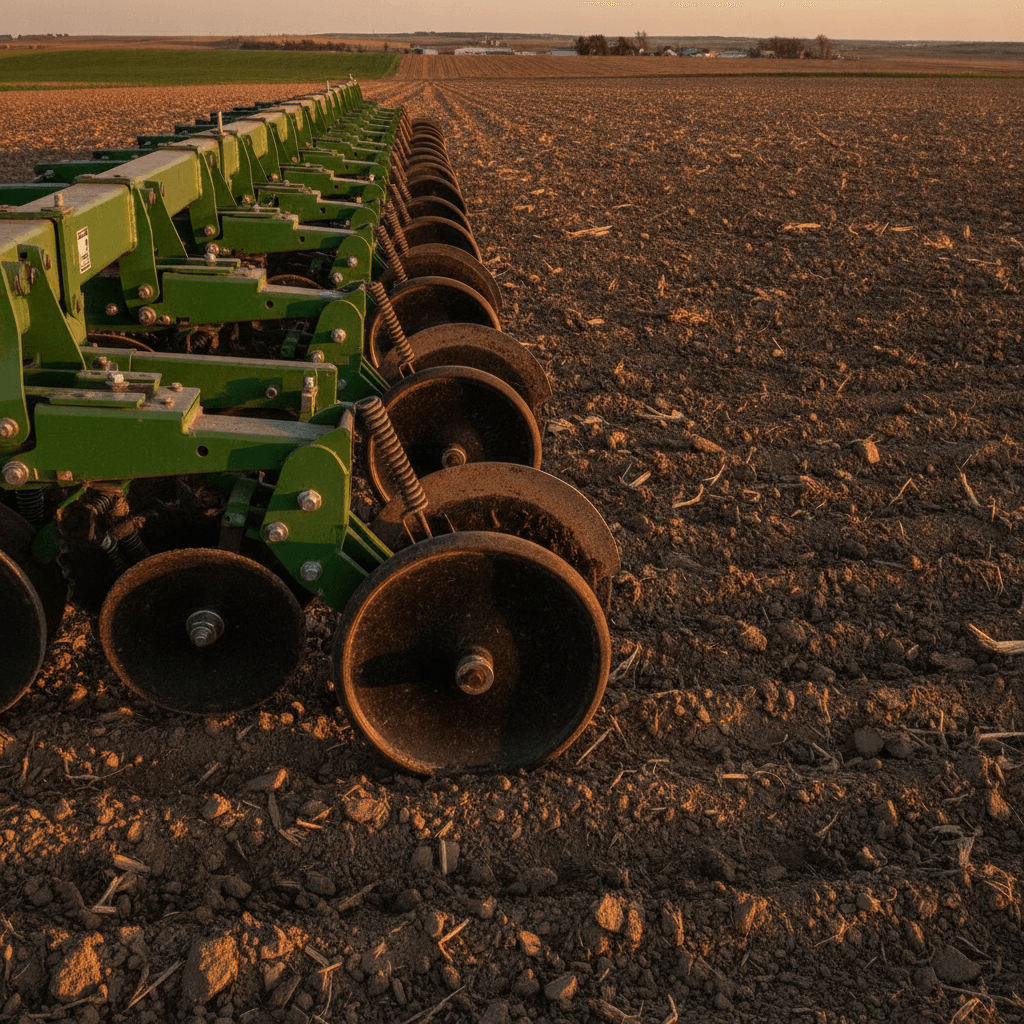
How Do Farmers Near Huron Decide Whether a Steel Ring Scraper Is Actually Doing Its Job — Or Just Along for the Ride?
Here’s a question most scraper manufacturers won’t ask out loud: how do you actually know your scraper is working? If you’re farming near Huron, South Dakota, where spring planting can flip from firm ground to gumbo mud in a matter of hours, this question matters more than it sounds. A scraper that’s positioned wrong, worn down, or built to the wrong geometry isn’t protecting your gauge wheel tire lip or shedding mud — it’s just along for the ride. And you’re paying for it either way.
Most of the advice you’ll find online about gauge wheel scrapers covers the basics: yes, you need one, mud is bad, scrapers help. What almost nobody covers is how to actually verify your scraper is performing in the field — and what specific failure signs to watch for before they turn into a half-day repair or a blown planting window.
What a Scraper Is Actually Supposed to Do
A gauge wheel scraper has one job: keep mud and crop residue from packing into the gauge wheel tire and disrupting planting depth. When that mud builds up unevenly, the wheel stops riding at a consistent depth. Your seed placement gets erratic. Your emergence window widens. Yield suffers — and you might not even connect the dots back to a clogged scraper until you’re looking at a patchy stand two weeks later.
The secondary job of a well-designed scraper is protecting the tire lip itself. That’s the raised inner edge of the gauge wheel tire that contacts the disk blade. In heavy clay soils — common across central South Dakota and into the loam belts of Minnesota and Iowa — the tire lip takes a beating. It wears down, and when it does, the whole wheel loses its depth-sensing geometry.
A scraper that’s doing both jobs right should leave the tire face clean after each pass, with no crescent-shaped mud buildup on either side of the wheel. If you’re pulling mud wings or packed crescents off your gauge wheels at the end of a row, your scraper isn’t keeping up — regardless of what brand it is.
The Clearance Problem Most Farmers Don’t Check Until It’s Too Late
One of the most common scraper failures isn’t dramatic — it’s gradual. The scraper slowly loses contact with the tire face as the tire wears or the mounting position shifts with vibration. You started the season with good contact. By April, you’ve got a quarter inch of clearance and the scraper is doing nothing but rattling around near the wheel.
Check scraper-to-tire contact at the beginning of the season, then again after the first full day of planting. It takes two minutes per row unit. If you can slide a pencil between the scraper and the tire face, you’ve already lost the battle against mud — especially in the heavier soils around Huron and Aberdeen.
With Jung Enterprise’s Steel Ring, the scraper function is built directly into the ring itself. The ring mounts to the outer face of the gauge wheel tire with six screws, protects the tire lip from wear, and acts as an integrated scraper — so there’s no separate scraper part to lose contact, misalign, or replace. It’s one component doing two jobs, which is a different approach from the clip-on scraper designs most farmers are used to.
Signs Your Current Scraper Setup Is Failing You
You shouldn’t need to guess whether your scraper is working. Look for these specific indicators during and after a planting pass:
- Mud crescents on the inside face of the gauge wheel — residue packing between the wheel and the disk blade is a clear sign the scraper isn’t clearing the contact zone.
- Uneven seed depth across the row — if depth is consistent in dry conditions but goes variable in wet conditions, that’s often a mud-buildup problem, not a down-force problem.
- Visible tire lip wear after one season — the tire lip should hold its profile. If it’s rounding off or cracking, the scraper isn’t keeping debris out of that contact area.
- Scraper tabs bent or deflected outward — this happens when the scraper takes a hit in heavy residue and loses its set angle. Once bent, it’s no longer making proper contact.
- Dirt packed into scraper mounting hardware — if the mounting bolts or clips are buried in packed mud, the whole assembly has been fighting debris for a while and likely lost.
Why the Scraper Design Matters More Than the Brand Name
Here’s the gap nobody in the industry likes to talk about: most scraper product pages tell you what the scraper is made of and how it mounts, but they don’t tell you what happens to scraper-to-tire contact as the tire wears down over 5,000 or 10,000 acres. That’s a real problem, because a scraper designed around a new tire profile will be out of position by the time that tire has seen a full season of no-till corn and soybeans.
The Jung Enterprise Steel Ring sidesteps this issue by design. Because the ring mounts directly to the tire, it moves with the tire. The scraper geometry stays consistent relative to the tire face regardless of how much the tire has worn — you’re not relying on a fixed-position clip to maintain contact with a surface that’s slowly changing shape under it.
That’s part of why the Steel Ring has held up to only 1/16 inch of measurable wear after 13,000 planted acres across three growing seasons. The design keeps the scraper in contact with the work surface the entire time, which is exactly where it needs to be.
What Farmers Near Huron Should Do Before Next Season
If you’re doing any post-harvest equipment review — or if you’re planning for a February or March parts order — add scraper condition to your checklist. Don’t just confirm the scraper is present. Confirm it’s actually making contact, that the tire lip under it is still in spec, and that your mounting hardware hasn’t backed off or cracked.
If you’re running a separate bolt-on scraper and a separate tire lip protector, that’s two parts to source, two parts to install, and two failure points to track. Jung Enterprise builds those two functions into one patented part — covered under US Patent 11,707,013 B2. Farmers across South Dakota and North Dakota have been running these in corn and soybean operations, and the wear data backs up the durability claim.
You can review the full Steel Ring specs and fitment information on the our products page, or call us directly at (605) 281-0497 to talk through compatibility with your current planter setup.
Frequently Asked Questions
How do I know if my gauge wheel scraper has the right contact angle on my planter?
With the planter raised and the gauge wheel spinning freely, the scraper should maintain light but consistent contact with the tire face across the full width of the scraper edge. If you can see daylight between the scraper and the tire in the center of the arc, the angle is off and it won’t shed mud effectively in the field.
Do steel ring scrapers work differently than clip-on scrapers for no-till drills?
Yes, in a meaningful way. Clip-on scrapers are static — they mount to the row unit frame and stay fixed as the tire wears. A ring-style scraper that mounts to the tire itself maintains consistent contact geometry as the tire profile changes over time. For no-till drills running in heavy residue conditions around Huron or across central South Dakota, that consistency matters when you’re trying to hold depth pass after pass.
Can mud plugging cause planting depth problems even if my down-force is set correctly?
Absolutely. Down-force controls how hard the gauge wheel presses into the soil. But if the gauge wheel tire face is packed with mud, the effective diameter of the wheel changes, and the depth-sensing contact point shifts. You can have perfect down-force settings and still get inconsistent depth if the scraper isn’t keeping the tire face clean.
How often should I inspect gauge wheel scrapers during planting season?
At minimum, check scraper contact at the start of each day when you’re running in wet or residue-heavy conditions. Heavy clay soils like those common around Huron and Aberdeen will pack faster and harder than lighter ground. If you’re noticing mud buildup mid-day, don’t wait until the end of the field — stop and clear it. Letting it pack tighter makes the problem worse and can start loading the gauge wheel bearing.
Does Jung Enterprise ship parts to farmers outside of South Dakota?
Yes. Jung Enterprise ships Steel Rings, Wheel Retainers, and Curved Spoked Gauge Wheels to farmers, custom planters, and ag dealers across the Northern Plains — including North Dakota, Minnesota, Iowa, and Nebraska. Lead times vary by season, so ordering before peak planting demand (February through April) is always the better move.
If you’re not sure whether your current scraper setup is actually doing its job — or you want to know whether the Jung Enterprise Steel Ring fits your row units — reach out to us directly. We’re based in Ipswich and we’ll give you a straight answer, not a sales pitch.