
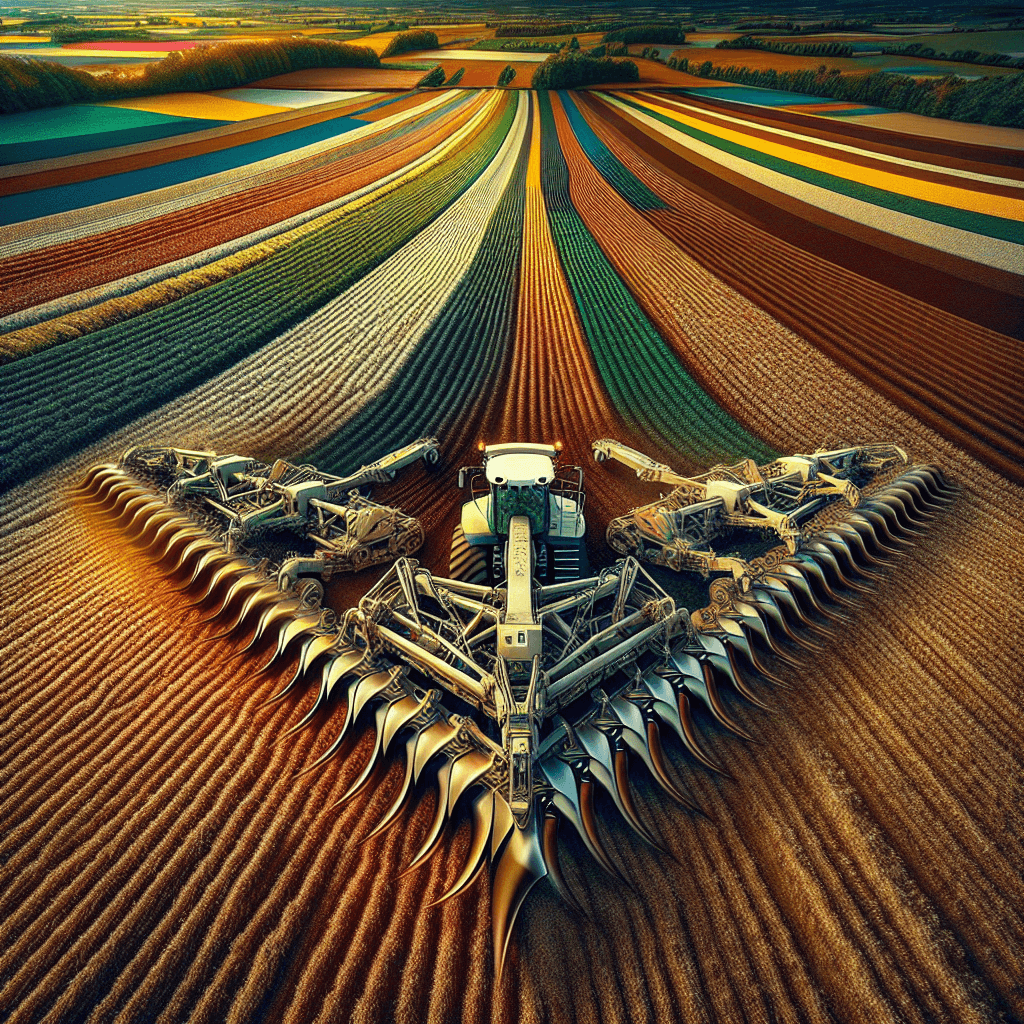
In the world of agriculture, the foundation of a bountiful harvest begins with meticulous soil preparation. This crucial step sets the stage for effective planting and thriving crops. In the Ipswich region, a revolution is taking place with the introduction of disk blade scrapers, tools that have significantly boosted farming efficiency. These innovative implements tackle the common challenges that farmers face—from soil compaction to varied soil textures—to ensure a smooth, nutrient-rich bed for planting. As you delve deeper into this article, you will discover how these advanced scrapers are not just tools, but transformative allies for the modern farmer, promising enhanced productivity and sustainability.
## Understanding Disk Blade Technology and Its Impact on Modern Farming
The Evolution of Disk Blade Technology in Agriculture
Agriculture has seen remarkable transformations over the decades, and disk blade technology is no exception. From rudimentary tools to highly sophisticated implements, disk blades have undergone significant evolution. In Ipswich, adaptations specific to local soil conditions have turned these tools into indispensable assets in modern farming. Originally, disk blades were simple metal discs meant to churn the soil superficially. Over time, technological advancements engineered them to penetrate deeper, enhancing their efficiency and durability.
This evolution tailored disk blade scrapers to meet the challenging requirements of Ipswich’s diverse soil. By analyzing regional conditions, engineers enhanced the blades for strength and adaptability. These tools evolved with new materials and precision engineering, capable of slicing through even the most unyielding soil types. Technological innovations have increased their life span and robustness, making farming processes both efficient and reliable.
Different Types of Disk Blades and Their Specific Applications
The choice of disk blade can greatly influence the quality of soil preparation. Today’s farmers in Ipswich have a selection—smooth, notched, and wavy blades—each suited to particular soil conditions. Smooth blades are best for lighter, sandy soils, ensuring easy penetration and movement. Notched blades, with their serrated edges, are ideal for tougher, compacted soils, as they can cut through debris and clods more effectively. Wavy blades, meanwhile, provide a balance between penetration and surface disruption, suitable for medium-density soils.
The blade’s concavity also affects soil penetration and mixing. A deeper concavity allows for greater soil turning and mixing, enhancing aeration and resilience. Selecting the right blade type and concavity depends on the specific soil conditions of each plot, with each variant tailored to maximize efficiency and productivity. Understanding these specificities empowers Ipswich farmers to make informed decisions, ensuring optimal soil health and crop yield.
How Quality Disk Blade Scrapers Enhance Equipment Performance
Disk blade scrapers play a pivotal role in maintaining the efficiency and longevity of disk blades. The primary function of these scrapers is to prevent soil buildup on the blades. This buildup, often exacerbated in heavy or moist soil conditions like those found in Ipswich, can significantly hamper efficiency. By keeping the blades clean, scrapers maintain the cutting edge, minimizing drag and ensuring consistent soil penetration.
Mechanical scrapers delicately remove excess soil and debris without damaging the disk blades. This function not only enhances cutting efficiency but also reduces equipment maintenance costs by preventing excessive wear and tear. The result is better-prepared soil, reduced downtime for cleaning and repairs, and a more streamlined farming operation. Ipswich farmers have noticed the stark difference that quality disk blade scrapers bring to their work, highlighting their value in transforming traditional soil preparation methods into modern, efficient processes.
## Transforming Soil Preparation Practices with Advanced Disk Blade Solutions
Overcoming Common Soil Preparation Challenges in Ipswich
Agriculture in Ipswich presents its own set of challenges, with soil conditions varying significantly from season to season. The high clay content and fluctuating moisture levels make soil preparation a complex task. Fortunately, quality disk blade scrapers offer a robust solution to these issues. By managing varying soil types, these scrapers adapt seamlessly to the dynamic environment. They effectively prevent soil from sticking to the blades, which not only helps in maintaining consistent tillage depth but also improves soil aeration and water penetration. As a result, Ipswich farmers can now manage their soil preparation more efficiently, improving overall crop health and yields.
Integrating Disk Blade Scrapers with Modern Tillage Equipment
Incorporating disk blade scrapers into modern tillage equipment is simpler than many might think. Compatibility with various harrow types, such as tandem and offset, enhances their versatility. When installing these scrapers, it’s crucial to follow best practices to ensure optimal performance. This includes securing the scrapers correctly and making any necessary adjustments to the angle and spacing. Once properly integrated, disk blade scrapers work efficiently with both primary and secondary tillage equipment, allowing farmers to transition between different tillage stages without hassle. This versatility not only streamlines operations but also maximizes the utility of existing equipment.
Case Studies: Real Results from Ipswich Farmers
To illustrate the tangible benefits of using disk blade scrapers, several farmers in Ipswich have generously shared their experiences. One farmer reported that after implementing these scrapers, he noticed a dramatic improvement in the quality of his soil tilth and structure. The time spent on soil preparation reduced significantly, allowing him to cover more acres per day. Another Ipswich farmer highlighted the increase in crop yield due to enhanced soil mixing and reduced compaction. Furthermore, the decrease in equipment maintenance and repair costs has been a welcome relief for many. These real-world examples underscore the scrapers’ effectiveness in transforming soil preparation practices, delivering both time and cost savings.
## Conclusion
In conclusion, the integration of advanced disk blade scrapers in the Ipswich region has marked a paradigm shift in soil preparation processes, setting the stage for enhanced agricultural productivity. By effectively addressing the challenges posed by various soil types and weather conditions, these scrapers have proven to be invaluable, ensuring optimum equipment performance and significant operational efficiencies. As underscored by the experiences of local farmers, the adoption of quality scrapers has not only improved soil quality and increased yields but also delivered tangible savings in time and maintenance costs.
Investing in the right disk blade scrapers tailored to your specific needs, coupled with consistent maintenance practices, ensures that your equipment remains at peak functionality. The long-term benefits—ranging from reduced downtime to increased profitability—emphasize the importance of making informed decisions about soil preparation tools.
As the agricultural landscape continues to evolve, embracing technological advancements like disk blade scrapers is essential for those aiming to stay competitive and sustainable. We encourage farmers to critically assess their current systems and explore how integrating these advanced tools can transform their farming operations. For those seeking to optimize their practices and enhance crop production, disk blade scrapers represent a strategic investment toward cultivating long-term success.
How Quality Disk Blade Scrapers Enhance Equipment Performance
In the evolving landscape of agriculture, the efficiency of your tools can make a significant difference in both the operation and the outcome of your farming practices. Disk blade scrapers in Ipswich have carved out a niche as transformative tools, crucial for maximizing the performance of tillage equipment.
Preventing Soil Buildup: The Scraper Advantage
The core function of a disk blade scraper is elegantly simple yet profoundly impactful: to prevent soil from building up on the blades. This buildup can be a major hindrance during soil preparation, clinging to the blades and reducing their cutting and mixing efficiency. By eliminating this problem, scrapers ensure that your equipment operates at an optimal level, allowing your disk blades to perform as designed.
Mechanism of Action: Improving Efficiency and Longevity
But how exactly does a disk blade scraper work? Essentially, these scrapers act as a brush that sweeps across the disk blade with every rotation. This contact dislodges any accumulated soil and residues, keeping the blade’s edge and surface clean. By ensuring continuous, unobstructed contact with the soil, scrapers enable blades to cut through and turn over soil efficiently.
Moreover, by reducing the friction caused by soil buildup, scrapers prolong the lifespan of your disk blades. Less friction translates to reduced wear and tear, meaning you spend less time and money on repairs or replacements. This not only enhances the operational life of your equipment but also contributes to smoother, more reliable performance.
The Ripple Effects: Better Soil Preparation and Reduced Costs
The benefits of using a disk blade scraper extend well beyond just preventing buildup. With consistently clean blades, the quality of soil preparation is markedly improved. Disk blades can penetrate more deeply and uniformly, leading to better mixing and incorporation of soil and residue. This thorough preparation sets a solid foundation for planting, ultimately supporting healthier crop growth.
Furthermore, the efficiency gained from using scrapers translates into tangible cost savings. Reduced maintenance needs and longer equipment life mean that your upfront investment in quality scrapers pays off over time. More efficient soil preparation also reduces fuel consumption and labor costs, as equipment can cover more ground quickly and with less effort.
Choosing the Right Scraper for Optimal Performance
Selecting the right disk blade scraper involves considering several key factors. The type of soil you’re working with, the compatibility with your existing tillage equipment, and the durability of the scraper itself are all crucial. Working with a local provider familiar with Ipswich’s unique soil conditions ensures you choose the right scraper for your needs, offering an edge in local expertise and support.
In conclusion, investing in high-quality disk blade scrapers can enormously boost the efficiency of your tillage operations. By keeping blades clean and functional, scrapers not only facilitate better soil preparation but also foster more sustainable, cost-effective farming practices. For Ipswich farmers eager to increase productivity, the integration of these tools offers a pathway to notable improvements in both performance and yield.
## FAQs
How do disk blade scrapers improve soil preparation efficiency?
Disk blade scrapers prevent soil buildup on blades, ensuring consistent soil penetration and mixing. This results in more uniform tillage, better residue incorporation, and reduced power requirements. By keeping blades clean, scrapers allow for faster operation speeds and more acres covered per day, ultimately saving time and fuel during critical planting windows.
What types of soil conditions benefit most from disk blade scrapers?
Heavy clay soils and wet conditions benefit tremendously from disk blade scrapers as these environments cause the most buildup on blades. Sandy soils with high organic matter content also see improvements as scrapers prevent residue wrapping. Virtually all soil types show enhanced tillage quality with properly installed scrapers, but the most dramatic improvements are seen in challenging soil conditions that would otherwise cause frequent stops for manual cleaning.
How often should disk blade scrapers be replaced or maintained?
Disk blade scrapers should be inspected before each major tillage operation and replaced when they show significant wear or no longer maintain proper contact with the blade. Typically, scrapers may last 1-3 seasons depending on acreage and soil conditions. Regular maintenance includes checking mounting hardware tightness, ensuring proper clearance and contact angle with blades, and removing any debris buildup between the scraper and blade. Proactive replacement before complete failure prevents blade damage and maintains optimal soil preparation efficiency.