
How Do Corn and Soybean Farmers Near Mitchell Know Whether Their Planter’s Steel Ring Is Actually Mounted with the Right Hardware — Or Just Hand-Tightened and Waiting to Vibrate Loose Before the First Field Is Done?
If you’re farming corn or soybeans near Mitchell, South Dakota, and you’ve put a steel ring on your planter’s gauge wheel, the installation itself matters as much as the part. A ring that’s hand-tightened with mismatched hardware, or mounted with the wrong fastener count, isn’t going to stay put once you’re running 5–6 mph through rough spring ground. The vibration alone will back screws out within a few hundred acres — and when that ring shifts or spins, the scraper function quits working, the tire lip starts taking the abuse it was supposed to be protected from, and you’re pulling into the shop at the worst possible time.
Here’s what correct steel ring mounting actually looks like, and why the hardware setup on a patented ring design is worth understanding before you bolt anything on.
Why Mounting Hardware Isn’t an Afterthought on a Steel Ring
Most farmers think about the steel ring itself — the material, the thickness, whether it’s going to wear through — and don’t spend much time thinking about how it attaches to the gauge wheel. That’s understandable. But the mount is where most steel ring problems actually start.
A gauge wheel spins continuously under load. It’s carrying the weight of the row unit, running against soil with varying moisture and density, and picking up debris. Any fastener that isn’t properly matched to the ring design and torqued correctly will eventually work loose. When that happens on a ring that also functions as a scraper — the kind of integrated design Jung Enterprise builds into its steel ring — the scraper can’t do its job because the ring itself isn’t sitting where it needs to sit relative to the tire.
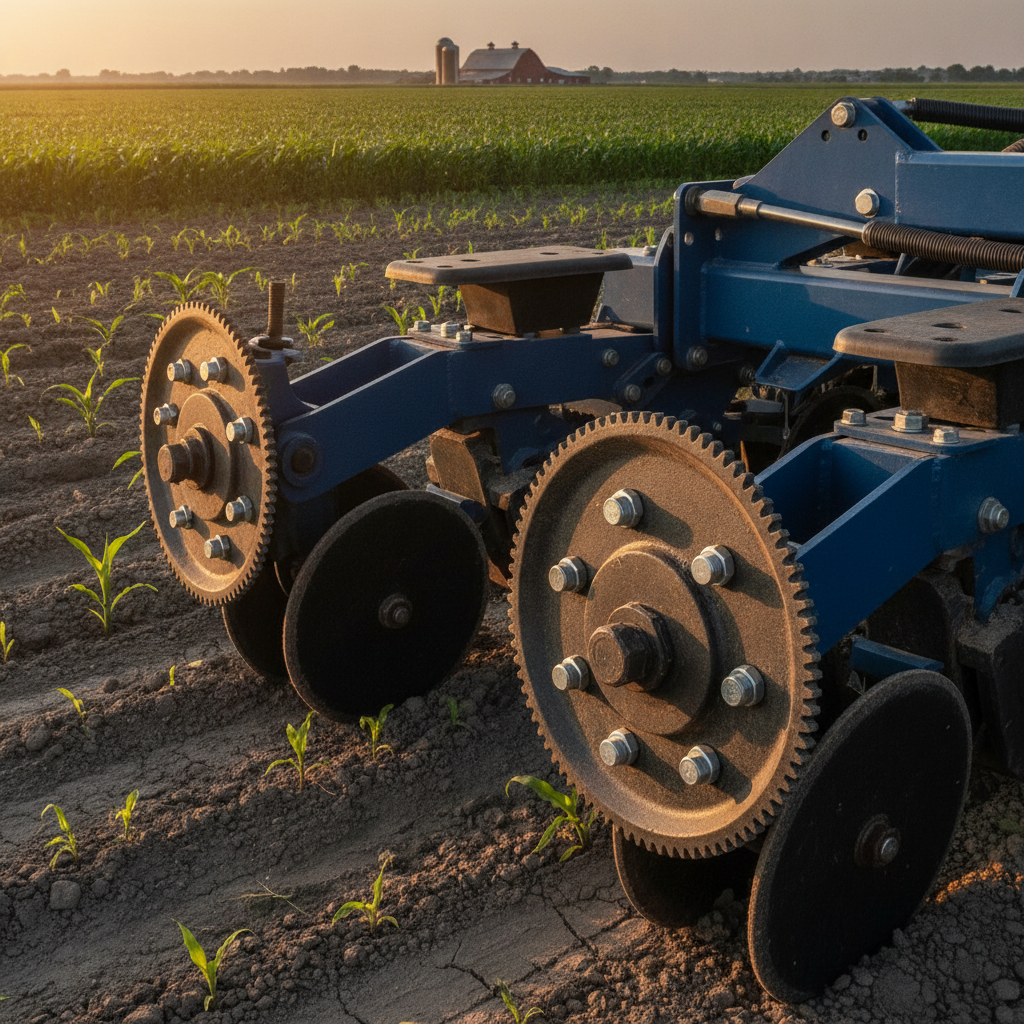
The Jung Enterprise steel ring uses a six-screw mounting pattern. That’s not arbitrary. Six evenly spaced fastening points distribute load around the full circumference of the ring, which keeps it from developing a wobble or shifting under vibration. Fewer screws means more load on each individual fastener and more opportunity for movement — especially in the kind of wet, heavy clay soils common across south-central South Dakota in a typical May planting window.
What the Wrong Hardware Actually Does to a Steel Ring in the Field
Farmers near Mitchell running clay-heavy ground know how much torque gets put on a row unit in wet conditions. When a steel ring is under-fastened or mounted with hardware that isn’t rated for the application, a few things can happen — none of them good:
- The ring rotates independently of the wheel. Instead of turning with the gauge wheel tire, it starts spinning on its own axis. That means the scraper geometry breaks down and mud starts packing instead of clearing.
- Screws back out progressively. You may not notice immediately. By the time you see the ring sitting at an angle, you’ve already planted 50–100 acres with inconsistent depth control.
- The tire lip gets exposed. The whole point of a steel ring is to protect the tire lip from soil abrasion. A ring that’s shifted off-center or tilted isn’t covering what it needs to cover.
- Downtime during planting. In Mitchell’s short spring window — often two to three weeks of usable ground conditions — stopping to remount a loose ring mid-field costs more than the part is worth.
What Correct Installation Actually Looks Like
The Jung Enterprise steel ring mounts with six screws in a specific pattern designed around the ring’s patented geometry (US Patent 11,707,013 B2 and related patents). The installation process is straightforward, but a few things matter:
- All six screws seated and torqued — not hand-tight. This is the most common installation error. Hand-tight is not tight enough for field conditions. Use a torque wrench and follow the specified value.
- Even gaps around the ring before final tightening. Before you run down all six screws, check that the ring is centered on the tire lip. An off-center ring puts uneven load on the fasteners and defeats the scraper function.
- Inspect after the first 50 acres. New installations can settle slightly under load. A quick check and re-torque after the first field is good practice on any steel ring, regardless of brand.
- Don’t substitute hardware. If a screw strips or is missing, replace it with the correct spec. Generic hardware store fasteners often aren’t the right grade or thread pitch for this application.
The durability case for getting the mount right is backed up in the field: Jung Enterprise’s steel ring has been tested across 13,000 planted acres over three seasons and showed only 1/16″ of wear. That result assumes the ring was mounted correctly and stayed mounted. A ring that’s been moving around doesn’t wear evenly and won’t give you that kind of service life.
Does This Apply to Air Seeders and No-Till Drills Too?
Yes. If you’re running an air seeder or no-till drill — which is common across south-central South Dakota, particularly in fields that have moved toward reduced tillage — the same mounting principles apply. Air seeders tend to run heavier row units with higher downforce, which puts more stress on the fastening system. If anything, the torque spec matters more on a heavier machine. The Jung Enterprise steel ring is compatible across planters, air seeders, and no-till drills, and the installation requirements don’t change by machine type.
Farmers running no-till or strip-till systems near Mitchell are also dealing with more residue load on the gauge wheel, which increases the lateral forces on the ring during planting passes. That’s another reason the six-screw pattern and correct torque are worth taking seriously — a ring that’s adequately fastened handles residue drag; one that’s marginally fastened doesn’t.
Frequently Asked Questions — Steel Ring Mounting Near Mitchell, SD
How many screws should a properly installed steel ring have?
The Jung Enterprise steel ring uses six screws. That six-point mounting pattern is part of the patented design — it distributes clamping force evenly around the ring to prevent movement and maintain the scraper function throughout a full planting season.
Can I use standard hardware store screws if I lose one in the field?
Not recommended. The fasteners specified for the steel ring are matched to the thread pattern and load requirements of the design. Generic replacements may not torque correctly or may be a different grade. Contact Jung Enterprise directly for replacement hardware before the season starts.
How do I know if my steel ring has shifted during planting?
Walk the planter row units at a headland stop and look at the ring from the front. It should be centered on the tire lip with even clearance around the full circumference. If it’s sitting off to one side or at an angle, it has moved. Re-torque all six screws before continuing.
Does ring mounting change for heavy clay soils near Mitchell?
The installation process is the same, but clay soils — particularly the heavy gumbo common in south-central South Dakota — increase lateral and torsional load on the ring. That makes proper torque even more important. If you’re running in wet clay conditions, check fasteners more frequently in the first season.
Is a steel ring with a built-in scraper harder to mount than a standard ring?
No. The integrated scraper geometry on the Jung Enterprise ring doesn’t add steps to the installation — but it does mean the ring needs to stay centered and properly oriented to function. A ring that’s rotated or tilted loses the scraper angle, so getting the mount right the first time matters more than it would on a plain ring with no scraper function.
Get the Right Parts and the Right Installation Guidance Before Planting Season
If you’re farming near Mitchell and you’re not sure whether your steel rings are mounted correctly — or if you’re looking at replacing worn-out rings before spring — Jung Enterprise can help. We build American-made, patented steel rings out of Ipswich, South Dakota, and we can walk you through installation questions directly. Don’t wait until you’re in the field to figure out you’ve got a hardware problem.
Contact Jung Enterprise before planting season to get the right parts, the right hardware, and the answers you need to get through the season without losing time to something that should have been a 15-minute shop fix.