
How Do Farmers Near Watertown Know Whether Their Planter’s Gauge Wheels Are Actually Compatible With Their No-Till Drill — Or Just Assumed to Swap Over?
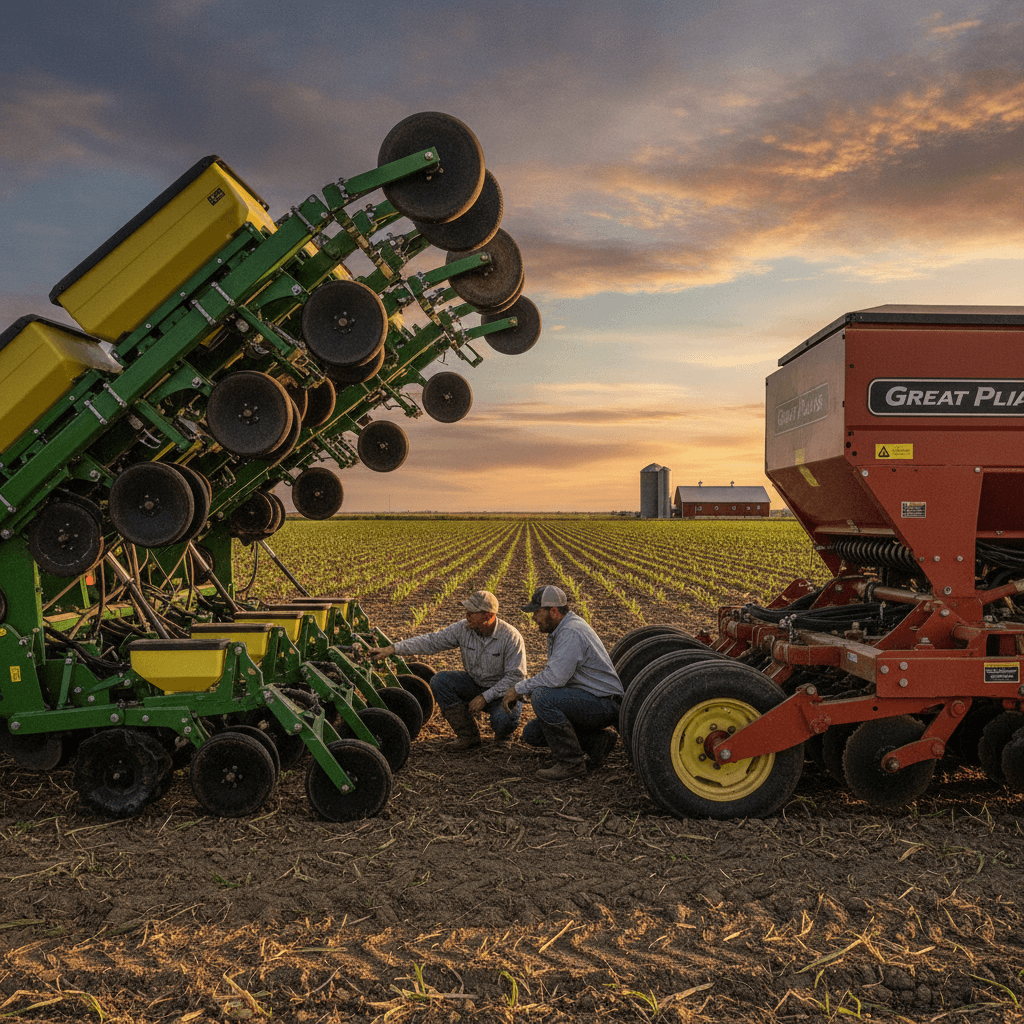
If you run a row planter for corn and soybeans and also pull a no-till drill for small grains or cover crops, there’s a good chance you’ve looked at the gauge wheels on both machines and thought they looked close enough to be interchangeable. Sometimes they are. Often they’re not — and assuming they swap creates depth control problems you won’t find until you’re already in the field. For farmers near Watertown operating in the mixed-crop, no-till country of eastern South Dakota, getting this wrong in a short planting window is a real cost, not just an inconvenience.
- Why This Question Gets Overlooked — And Why It Matters More Than It Should
- What to Actually Check Before You Assume They're Compatible
- The Part Competitors Don't Talk About: Tire Lip Wear Compounds Across Both Machines
- Wheel Retainers: Don't Skip This Step When Moving Wheels Between Machines
- Frequently Asked Questions
- Talk to Jung Enterprise Before Planting Season
Why This Question Gets Overlooked — And Why It Matters More Than It Should
Most of the conversation around gauge wheel compatibility focuses on brand-to-brand fitment: will a third-party wheel fit your John Deere or Case IH planter? That’s a legitimate question, but it misses a bigger one that’s especially relevant across the Northern Plains where operators routinely run both row planters and no-till drills in the same season. The machines look similar enough. The row units look close. But the engineering assumptions behind gauge wheel design are not the same.
A row planter gauge wheel is designed to ride beside the disc opener and control seed depth row-by-row, typically under moderate, fairly consistent downforce. A no-till drill gauge wheel — especially on a heavier toolbar drill working into standing residue and harder ground — faces different load conditions, different residue volumes, and often different hub geometries. If you pull a wheel from one machine and drop it on the other without verifying hub bore diameter, axle diameter, spoke profile, and tire width, you may get it on. Whether it actually controls depth the way it should is a different question.
What to Actually Check Before You Assume They’re Compatible
Hub Bore and Axle Diameter
This is the most obvious mechanical check, and still gets skipped. Gauge wheel hubs are not universal. A wheel that fits a 7/8-inch axle won’t seat properly on a 1-inch axle, and vice versa. Even if it slides on and bolts up, it’ll run with slop — and that slop shows up as erratic depth on every row it touches. Measure both before you assume.
Tire Width and Profile
No-till drills in heavy residue conditions — the kind common across eastern South Dakota and into western Minnesota — often need a narrower tire profile to thread through residue without dragging material into the trench. Row planter gauge wheels on the other hand tend to prioritize sidewall stiffness for depth consistency under load. The profiles aren’t always interchangeable, and running the wrong one compromises either residue clearance or depth stability depending on which direction you’re swapping.
Spoke Design and Mud Clearance
Open-spoke gauge wheel designs — like the curved spoked gauge wheels from Jung Enterprise — shed mud and residue actively rather than packing it. That matters on a row planter in gumbo conditions near Watertown. It matters even more on a no-till drill working into wet soil with heavy surface residue. Closed or flat-spoke designs pack debris regardless of which machine they’re on. If you’re evaluating cross-machine compatibility, spoke design should be part of the conversation — not just hub dimensions.
The Part Competitors Don’t Talk About: Tire Lip Wear Compounds Across Both Machines
Here’s a gap that most gauge wheel content — including what you’ll find on the major competitor sites — doesn’t address directly: when you’re running the same gauge wheel across two machines in a season, you’re also doubling the wear exposure. A wheel that completes a planting season on a row planter and then gets moved to a no-till drill for small grains is accumulating wear from two separate operations.
The tire lip — the outer edge of the gauge wheel that contacts the disc opener or the ground surface — is where that wear concentrates. Once the lip wears down, you lose the tight tolerance that makes depth control consistent. A wheel that looked fine after corn planting may be marginal by the time you run it on small grains, and genuinely worn out before you put it back on the planter next spring.
This is exactly why the steel ring exists. Jung Enterprise’s patented steel ring (US Patent 11,707,013 B2) mounts directly to the gauge wheel with six screws and protects the tire lip from wear — while also functioning as a built-in scraper that keeps mud from building up on the wheel surface. Field testing shows only 1/16 inch of wear after 13,000 planted acres across three years. If you’re running gauge wheels across multiple machines and multiple seasons, that’s not a small number. That’s the difference between a wheel that’s still performing in year three and one you’re replacing every season.
Wheel Retainers: Don’t Skip This Step When Moving Wheels Between Machines
Any time gauge wheels are removed and reinstalled — whether you’re swapping between a row planter and a no-till drill, or just pulling them for inspection — the wheel retainer needs to be checked. A retainer that’s been removed and reinstalled multiple times, or that’s showing fatigue, won’t hold the gauge wheel securely on the axle. In field conditions, a gauge wheel that’s not fully retained doesn’t just affect depth control. It comes off. And when it comes off mid-field, you’re stopping to fix it instead of planting.
Jung Enterprise’s wheel retainer is built specifically to prevent gauge wheel dislodging and installs clean without special tools. If you’re doing any cross-machine wheel movement this season, confirm your retainers are in good shape before the wheels go back on. Farmers near Aberdeen and Huron running no-till operations in tougher soils know that a loose gauge wheel doesn’t announce itself — it just fails at the worst time.
Frequently Asked Questions
Are gauge wheels from a John Deere row planter compatible with a John Deere no-till drill?
Not necessarily, even within the same brand. Hub bore, axle diameter, and tire profile can vary between the planter and drill product lines. Check the specifications for your specific model numbers before swapping. When in doubt, contact Jung Enterprise — we can help confirm fitment.
Does spoke design matter when choosing gauge wheels for a no-till drill?
Yes. Open curved-spoke designs shed residue and mud more effectively than flat or closed spoke profiles. In the heavy residue conditions common across eastern South Dakota and North Dakota, this difference directly affects trench quality and depth consistency.
How do I know when a gauge wheel that’s been used on two machines is worn out?
Check the tire lip first — that’s where wear concentrates. If the lip is visibly rounded or the tire surface shows cupping, depth control is already compromised. The steel ring protects that lip and extends service life across high-acre, multi-machine operations.
Will the Jung Enterprise steel ring fit gauge wheels for no-till drills, not just row planters?
The steel ring is compatible across planters, air seeders, and no-till drills in multiple gauge wheel sizes. Contact Jung Enterprise to confirm the right fit for your specific machine and wheel diameter.
How often should wheel retainers be inspected if gauge wheels are being moved between machines?
Inspect retainers every time a wheel is removed and reinstalled. Fatigue and deformation can occur after repeated removal cycles, and a retainer that’s marginal won’t hold reliably in field conditions. Replace before the season if there’s any question about condition.
Talk to Jung Enterprise Before Planting Season
If you’re running both a row planter and a no-till drill and you’re not sure whether your gauge wheels are actually set up correctly for both machines, get that sorted before the window opens — not during it. Jung Enterprise, based in Ipswich and serving farmers across South Dakota, North Dakota, and Minnesota, builds and sells the steel ring, wheel retainer, and curved spoked gauge wheels that address exactly these kinds of multi-machine, high-acre field problems.
American-made, patented, and field-tested to perform. Reach out to Jung Enterprise to talk through your setup and make sure you’re going into the season with the right parts on the right machines.